The right ergonomic setup should adapt to your body, support frequent movement, and stay comfortable through a full workday.
Sewing and crafting rarely keep you in one position. You may lean toward a sewing machine, turn to reach supplies, operate a foot pedal, or stand up to inspect your work.
The best chair for sewing and crafting should therefore do more than feel comfortable. It needs to match your work surface, support natural movement, and fit within your creative space.
Why Creative Work Needs the Right Chair
Sewing and crafting are different from conventional computer work. At a computer, you usually remain in front of one screen. During a creative project, you are more likely to lean forward, turn around, reach for tools, and change position.
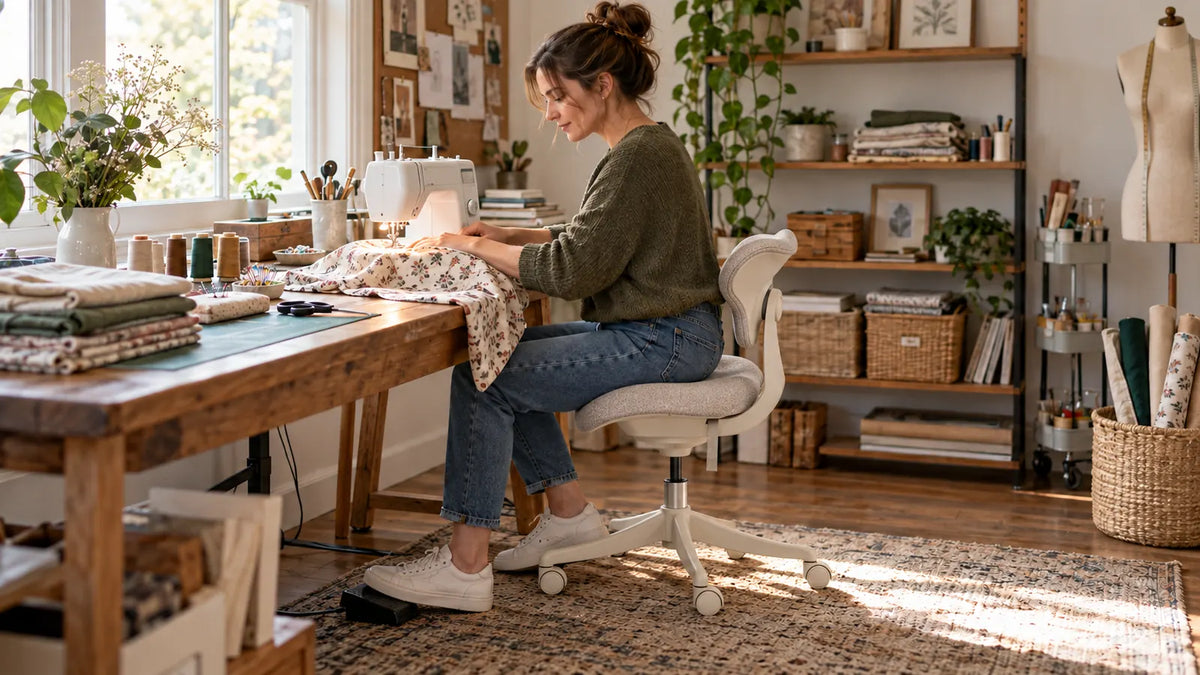
When using a sewing machine, for example, you need to stay close enough to guide the fabric while looking down at the stitching and operating the foot pedal. If the chair is too low or too far from the table, your shoulders and upper body may remain tense throughout the task.
Jewelry making creates a different challenge. Small components require you to sit closer to the work surface and keep your hands within a precise working area. A deep seat or wide armrests can prevent you from approaching the table comfortably.
Other craft projects may involve moving between cutting, assembly, storage, and a computer displaying patterns or instructions. In a small studio, an oversized chair can make these transitions unnecessarily difficult.
A good creative-work chair should provide basic support while making it easy to approach the table, turn toward supplies, and change position as the project develops.
What to Look for in a Sewing and Craft Chair
Correct Seat and Desk Height
Your chair should allow you to reach the work surface without raising your shoulders or bending too far forward. Your elbows should remain close to your sides, while your feet rest securely on the floor or a footrest.
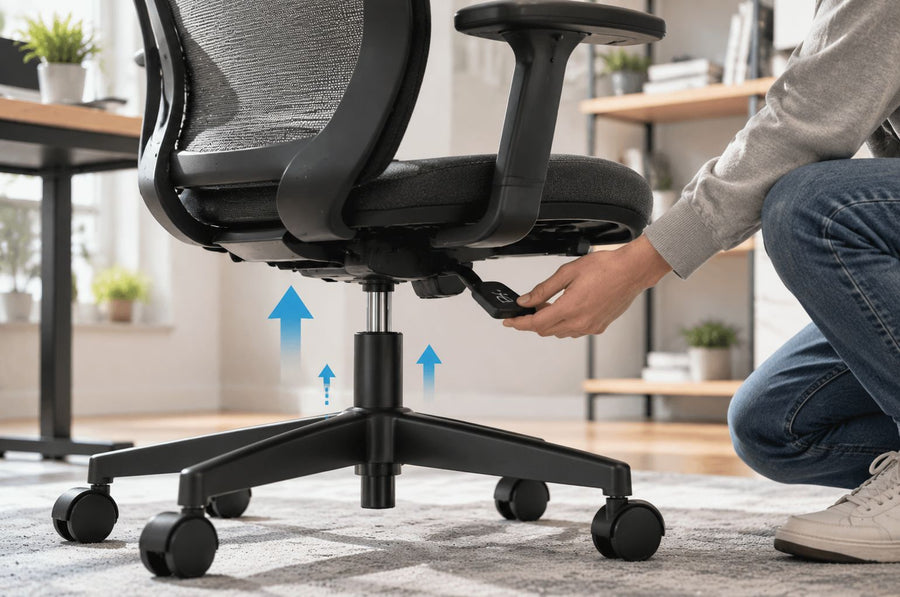
Measure your sewing table before choosing a chair, and check the chair’s key dimensions against the available space. An adjustable seat is especially useful if you work at surfaces of different heights.
If you use a sewing-machine pedal, make sure your feet can reach it comfortably. A footrest should not block or interfere with the pedal.
Support Without Restricting Movement
A slightly contoured seat can provide stability while still allowing you to change position. Avoid seats that are so deep that you need to perch on the front edge to reach your work.
A compact backrest can also be useful. It offers support when you sit back without surrounding the body or limiting movement like a large executive chair.
For longer creative sessions, choose enough cushioning to reduce pressure, but avoid a seat that is so soft that repositioning becomes difficult.
Armrests, Casters, and Chair Size
Fixed armrests may hit the table or prevent the chair from moving close enough to a sewing machine. An armless chair, or one with adjustable armrests, is usually more practical for creative work.
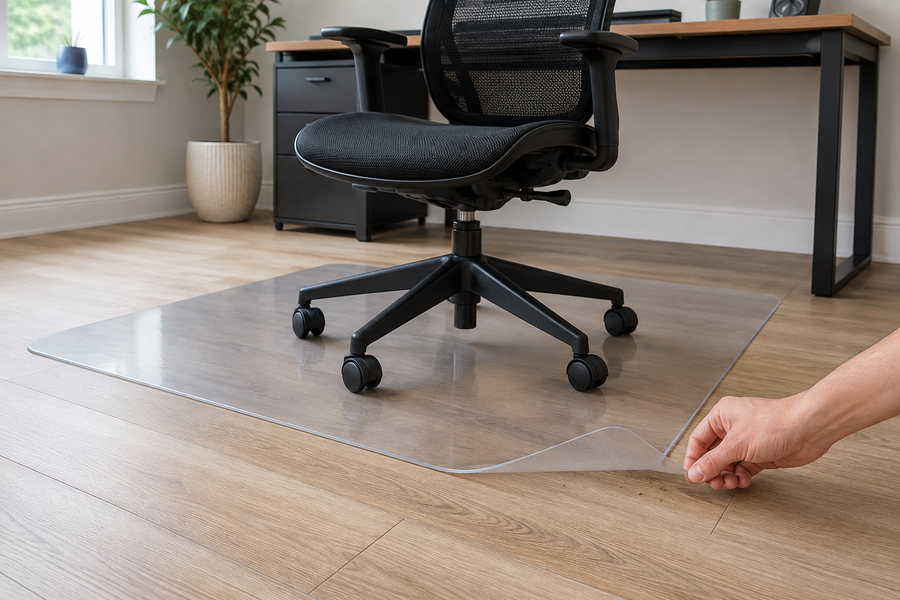
Casters make it easier to move between tools and storage, but they should match both the flooring and the task. A chair that rolls too freely may shift when you press a sewing-machine pedal, especially on smooth floors. If pedal stability is important, consider locking casters or a non-rolling base. With standard casters, test the chair in your actual setup before beginning a long project.
In a small craft room, check the complete width and depth of the chair, including its base. Also confirm that the seat and backrest can clear the underside of the table when the chair is not in use.
Choosing a Chair for Your Creative Routine
Match the chair type to the way you work. For sewing repairs, sketching, wrapping, and other short tasks that involve frequent movement, a compact stool or saddle-style chair may be the most practical choice. If you work for moderate periods and want support when pausing, consider a compact task chair with a backrest and no fixed armrests.
For several hours of continuous sewing or detailed craft work, prioritize a chair with adjustable seat height, seat tilt, and backrest position, along with supportive cushioning and a front edge that does not press into the backs of your legs. A fully adjustable ergonomic chair may be more suitable than a compact saddle chair for these longer sessions.
Before buying, compare the chair’s seat-height range with your actual work surface, check whether you can keep your elbows close to your sides, and confirm that both feet can remain supported. If you use a sewing-machine pedal, make sure the chair stays in position while the pedal is pressed.
Whatever chair you choose, take regular breaks and keep frequently used materials within easy reach.
Is a Saddle Chair Good for Sewing and Crafting?
Many saddle chairs have a compact seat and no bulky armrests, making it easier to sit close to a sewing table while leaving room to operate a foot pedal. Casters can also help when moving between a sewing machine, supply shelf, and cutting table.
For drawing, model making, and jewelry work, the saddle-shaped seat makes it easier to move forward and view small details. A backrest provides additional support when the task pauses.
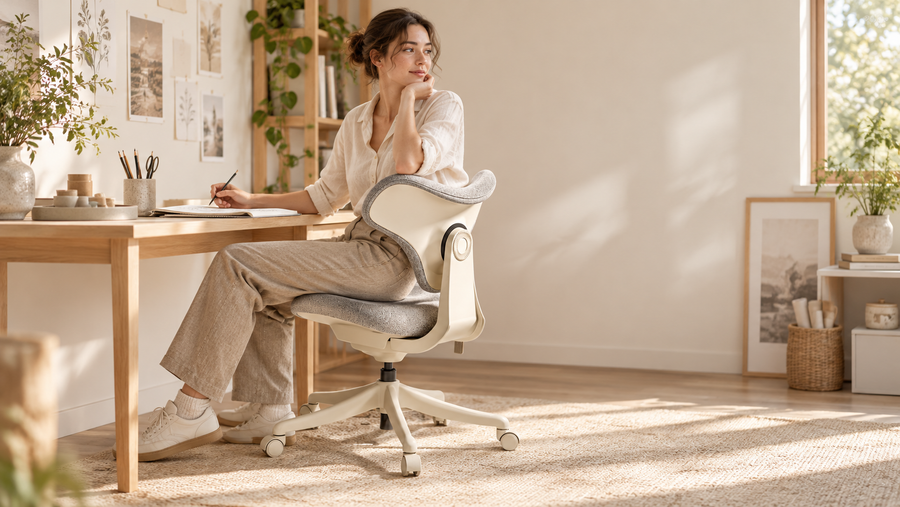
The OdinLake C1 Arc combines an upholstered saddle-inspired seat with a compact backrest, swivel base, and casters. It can fit well in sewing corners, small craft rooms, and multipurpose home workspaces.
Before choosing it, check that the seat-height range matches your table and that the chair remains stable while using a sewing-machine pedal.
Final Thoughts
The best chair for sewing and crafting should match your work surface, allow easy movement, and provide enough support for the length of your usual projects.
A compact saddle chair can be a good option for active creative tasks and smaller rooms. For long periods of continuous seated work, a fully adjustable ergonomic chair may be more suitable.
Choose a chair that fits your actual routine rather than simply selecting the largest or softest model. The right chair should support the creative process without getting in its way.
FAQ
What is the difference between a saddle chair and a saddle stool?
Both use a contoured saddle-style seat. A saddle stool is usually backless and designed for short, active tasks. A saddle chair may include a backrest, more cushioning, and additional adjustment features.
Is a saddle chair with a backrest better than a backless saddle stool?
A backrest provides support during pauses and longer sessions. A backless saddle stool offers more freedom of movement and may fit more easily into a small workspace.
Can a compact saddle chair fit in a small craft room?
Yes. Its smaller seat and backrest may take up less room than a traditional office chair. Check the full width of the chair base before purchasing.
Is a saddle chair suitable for artists and jewelry makers?
It can suit creators who frequently lean toward their work or move between tools. The chair still needs to match the height of the workbench and the length of each session.
Can you use a rolling saddle chair with a sewing-machine pedal?
Yes, but only if the chair stays securely in position while you operate the pedal. On smooth flooring, standard casters may allow the chair to roll backward as you press. Locking casters or a non-rolling base may be a better choice when pedal stability is a priority. Test the chair, flooring, and pedal together before beginning a long sewing session.