Prevent office-chair scratches on hardwood by cleaning the rolling system, checking floor compatibility, selecting the right barrier or casters, and verifying the occupied travel zone.
The right ergonomic setup should adapt to your body, support frequent movement, and stay comfortable through a full workday.
Protect a hardwood floor from an office chair by controlling three things: abrasive grit, caster contact, and the chair's complete rolling path. Start with a clean floor and clean, freely turning casters. Then use either a chair mat explicitly approved for your wood floor, wide soft casters approved for the chair and floor, or both when the finish is delicate or the chair sees heavy daily use.
No wheel should be treated as permanently “scratch-proof.” A soft wheel can still carry sand, a mat can trap debris, and an incompatible backing can affect a floor finish. The safest choice is the one your flooring manufacturer allows, your chair accepts, and you can inspect easily.
Protect the finish, not just the wood boards
Most early chair damage appears in the finish: faint arcs, dull tracks, scuffs, or a hazy patch where the chair repeats the same movements. The wood species matters, but so do the finish, installation, age of the floor, maintenance history, and debris in the room. A hard species with a vulnerable finish is not immune.
The main causes are usually mechanical:
- Abrasive particles: sand or grit caught beneath a wheel can be dragged through the same path many times.
- Hard or narrow casters: a small contact area concentrates the occupied chair's load.
- A wheel that does not swivel or roll freely: it scrubs sideways instead of following the chair.
- An incomplete protection zone: one or two casters repeatedly fall off a mat onto exposed wood.
- An incompatible mat or rug backing: the surface underneath may discolor, haze, trap moisture, or collect abrasive soil.
The National Wood Flooring Association's wood-floor care guidance emphasizes removing dirt, using floor-appropriate cleaners, and applying preventive protection in high-use areas. That is why cleaning and compatibility checks belong in the solution; adding a mat to a dirty floor is not enough.
Check what floor and wheels you actually have
Do this before buying accessories. “Wood floor” may refer to solid hardwood, engineered wood, or a wood-look surface. This guide focuses on real wood flooring. If the floor is laminate or vinyl plank, use that manufacturer's care and rolling-load instructions instead; the surface and backing restrictions may differ.
Read the floor maker's care and warranty instructions
Find the brand, product line, finish, and installation date from an invoice, spare plank, property record, or installer. Search the manufacturer's current care guide for “caster,” “rolling chair,” “mat,” “rug,” “backing,” and “floor protector.” If the floor is new or recently refinished, also check when rugs, mats, furniture, and rolling traffic may be placed on it.
Do not infer backing compatibility from the word “non-slip.” For example, Mirage's hardwood maintenance guidance advises against dense backings that restrict airflow and trap dirt or moisture, while Shaw's hardwood care guidance warns that certain rubber- or foam-backed plastic mats may discolor flooring. Those are manufacturer-specific examples, not a universal material rule. Follow the instructions for the floor you own.
Inspect all five casters without loading the chair

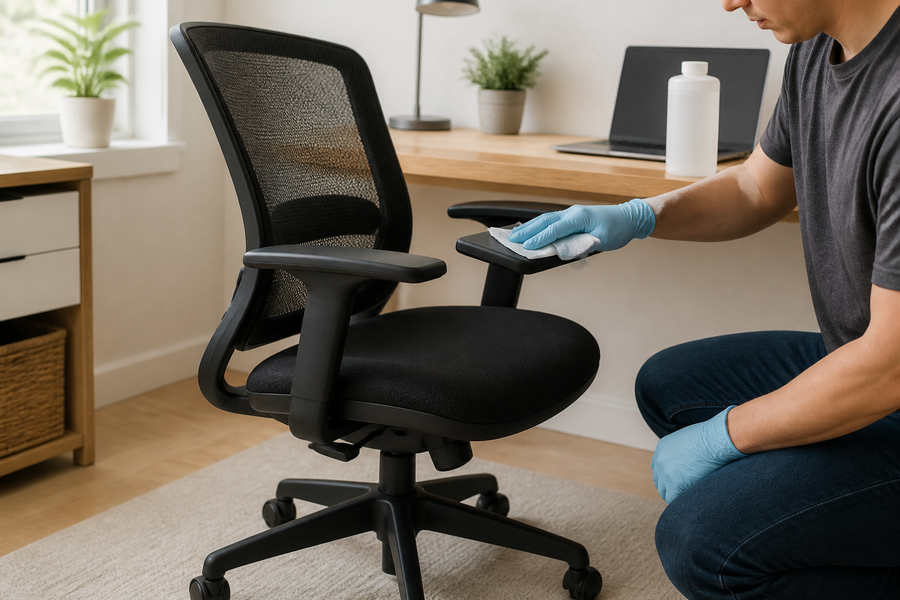
Move the chair away from the exposed wood before tipping it. Follow the chair manufacturer's handling instructions, then check every wheel for embedded grit, wrapped hair, cracks, flat spots, a loose stem, or a wheel that swivels but does not roll. Wipe the tread with a clean light-colored cloth so dark debris is easier to see.
If one caster drags, wobbles, or is damaged, stop rolling the occupied chair on the wood until it is cleaned or replaced. Do not mix one new caster with four different wheels unless the chair maker permits that configuration. A matching set keeps height and rolling behavior more consistent.
Pick the protection method that fits your risk
There is no single best product for every finished wood floor. Use the table as a decision aid, then confirm the choice with both the floor and chair documentation.
| Method | Best fit | Verify before use | Stop using it when |
|---|---|---|---|
| Hard-floor chair mat | You want a physical barrier and a defined rolling zone | Explicit wood-floor approval, smooth or specified underside, load rating, size, edge profile, backing compatibility, and cleaning method | It moves, curls, traps grit, changes the finish, or lets casters repeatedly cross an edge |
| Wide soft casters | You want direct rolling with less concentrated contact and the floor maker allows it | Chair stem fit, wheel set, load rating, material, diameter, floor approval, seat-height change, and rolling control | A wheel picks up debris, rolls too freely, leaves marks, fails to swivel, or changes chair stability |
| Compatible area rug and pad | Room design matters and both layers are approved for the finish and rolling use | Backing and pad chemistry, breathability, color transfer, pile, edge stability, cleaning, and full travel coverage | The rug shifts, bunches, catches a caster, traps dirt, or increases rolling effort excessively |
| Approved stationary glides | You do not need the chair to roll | Chair compatibility, stable five-point support, floor-contact material, and the intended way to reposition the chair | The chair rocks, a glide detaches, or users drag the occupied chair across the floor |
Use a mat made for hard floors, not carpet
A carpet chair mat commonly uses cleats or studs underneath. Those features are not intended to sit against finished hardwood. Choose a product whose manufacturer identifies your floor type as an approved application, then check whether the flooring maker also allows its material and backing.
Size matters more than the familiar chair-mat dimensions printed on shopping pages. A mat must contain the outer path of every caster while you type, reach side storage, roll back, and leave the desk. An undersized mat creates an edge crossing in the exact place where the chair carries the working load.
Treat soft or roller-style casters as a reduction measure
Wide rubber or soft polyurethane casters are commonly recommended for wood floors. Mirage explicitly recommends replacing narrow plastic casters with wide rubber or soft polyurethane ones, and Mannington's hardwood care guidance says furniture casters should be clean, operate properly, and have a continuous width of at least one inch.
Those points support wider, softer, well-maintained contact; they do not guarantee that every rollerblade-style wheel is safe on every finish. Verify the stem and load rating, install a complete matching set, and remember that larger wheels may raise the chair. Recheck seat and desk fit after the change. If the chair starts rolling away when you sit or stand, the new mobility has created a different safety problem.
Use a rug only when the whole rug system is compatible
A low-profile rug can separate the casters from the wood, but its backing, rug pad, dyes, edges, and cleaning needs all matter. Get written compatibility from the flooring guidance rather than placing an unverified rubber-backed rug on the finish. The rug also needs to cover the complete caster path without creating a raised edge where you push off or walk.
Set up the protection without creating new damage
Clean before you cover
- Move the chair and accessory out of the work area without dragging them across the floor.
- Dry-remove loose grit using the method approved by the flooring maker. Avoid a beater bar and do not wet-mop unless the care guide specifically allows the method.
- Clean the caster treads and confirm that each wheel rolls and swivels freely.
- Inspect the floor under low-angle light. Photograph any existing marks so you can distinguish old damage from a new change.
- Let every cleaned surface dry as directed before placing a mat, rug, or chair back in position.
Do not put tape, fabric, or adhesive wraps around the wheels as a permanent fix. They can detach, collect debris, stop the wheel from turning correctly, or leave residue on the floor.
Mark the chair's real travel path
Place small paper markers just outside the farthest point reached by each caster during a normal work session. Include the preferred exit side and any roll toward drawers or storage. Do not stick tape to the floor unless its manufacturer approves the adhesive.
Connect the outer markers mentally or with a paper template. Your protective surface must extend beyond that boundary far enough that normal movement does not put a caster on an edge. Keep transitions out of doorways and away from the spot where your foot pushes against the floor.
Run a seated roll test
Testing an empty chair is not enough; occupied rolling changes the load at each caster. After installing the chosen protection:
- Set the empty chair at the center and verify that all five casters contact the same surface.
- Sit normally, make small keyboard adjustments, reach both sides, roll back, stand, and return to the desk.
- Listen and feel for scraping, binding, sudden acceleration, rocking, or an edge catching a wheel.
- Confirm that the mat or rug stays flat and stationary and that no caster leaves the protected area.
- Stand and inspect the caster treads, floor, mat underside or rug edge, and the complete travel zone.
A passing setup rolls predictably without scraping, shifting, or exposing wood in the normal path. Stop if the chair runs away, a surface lifts, a caster binds, or a new mark appears. Correct the cause before repeating the test.
Recheck after one day and one week
Some problems are cumulative. Inspect the setup after the first full workday and again after a week. Use low-angle light to look for arcs, dulling, haze, color change, or debris. Lift only as the accessory instructions permit, and never drag a mat across grit while removing it.
Continue with a simple maintenance rhythm: remove visible debris promptly, clean the exposed rolling area on the schedule recommended for the floor, inspect caster treads regularly, and check beneath the protection surface often enough to catch trapped soil or finish changes early. Homes near sand, entryways, pets, or frequent outdoor-shoe traffic may need more frequent checks.
Avoid the shortcuts that move the damage elsewhere
- Do not place a cleated carpet mat on finished wood.
- Do not assume “non-marking,” “universal,” or “safe for all floors” overrides your flooring warranty.
- Do not use adhesive-backed protection unless the floor maker approves the exact product.
- Do not solve mat movement with screws, tacks, or unapproved tape through the floor finish.
- Do not ignore grit because the caster material feels soft.
- Do not use a damaged wheel, cracked base, curled mat, or unstable rug while the chair is occupied.
What to do if the floor already has marks
Stop chair traffic first and photograph the area in even and low-angle light. A transferred scuff, a scratch limited to the finish, and a groove into the wood are different problems. Use only the flooring manufacturer's approved cleaner and method; aggressive rubbing, abrasive pads, wax, polish, or an improvised solvent can make a small mark harder to repair.
If the mark remains, the finish has broken, boards are dented, or the correct repair method is uncertain, contact the flooring manufacturer, installer, or a qualified wood-floor professional. Keep the accessory packaging and photos. They help identify the material that contacted the floor and whether a warranty restriction applies.
What OdinLake owners can verify
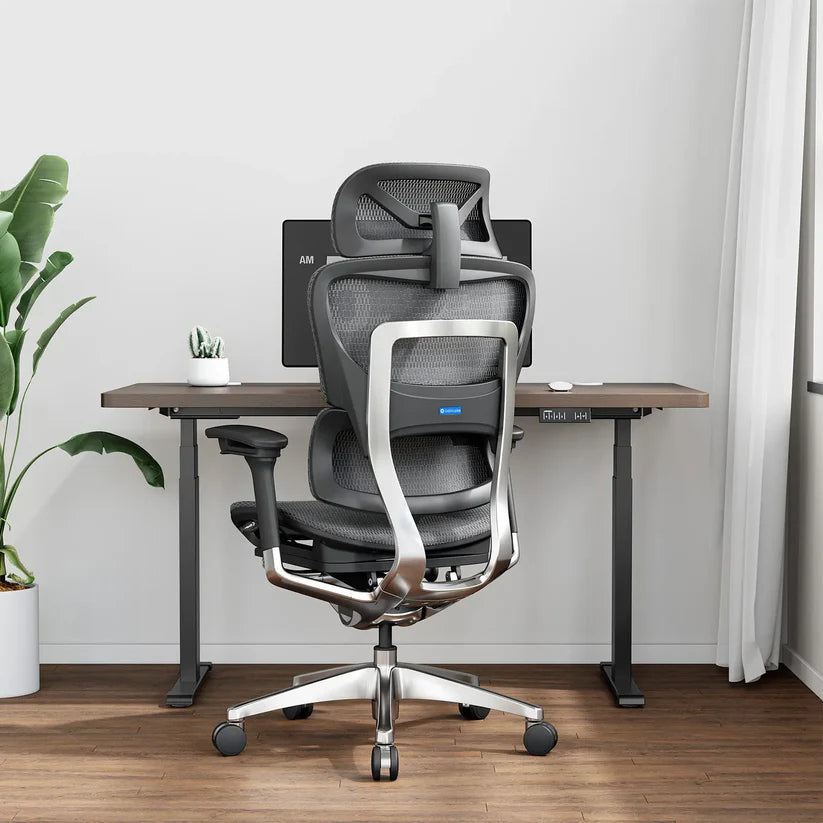
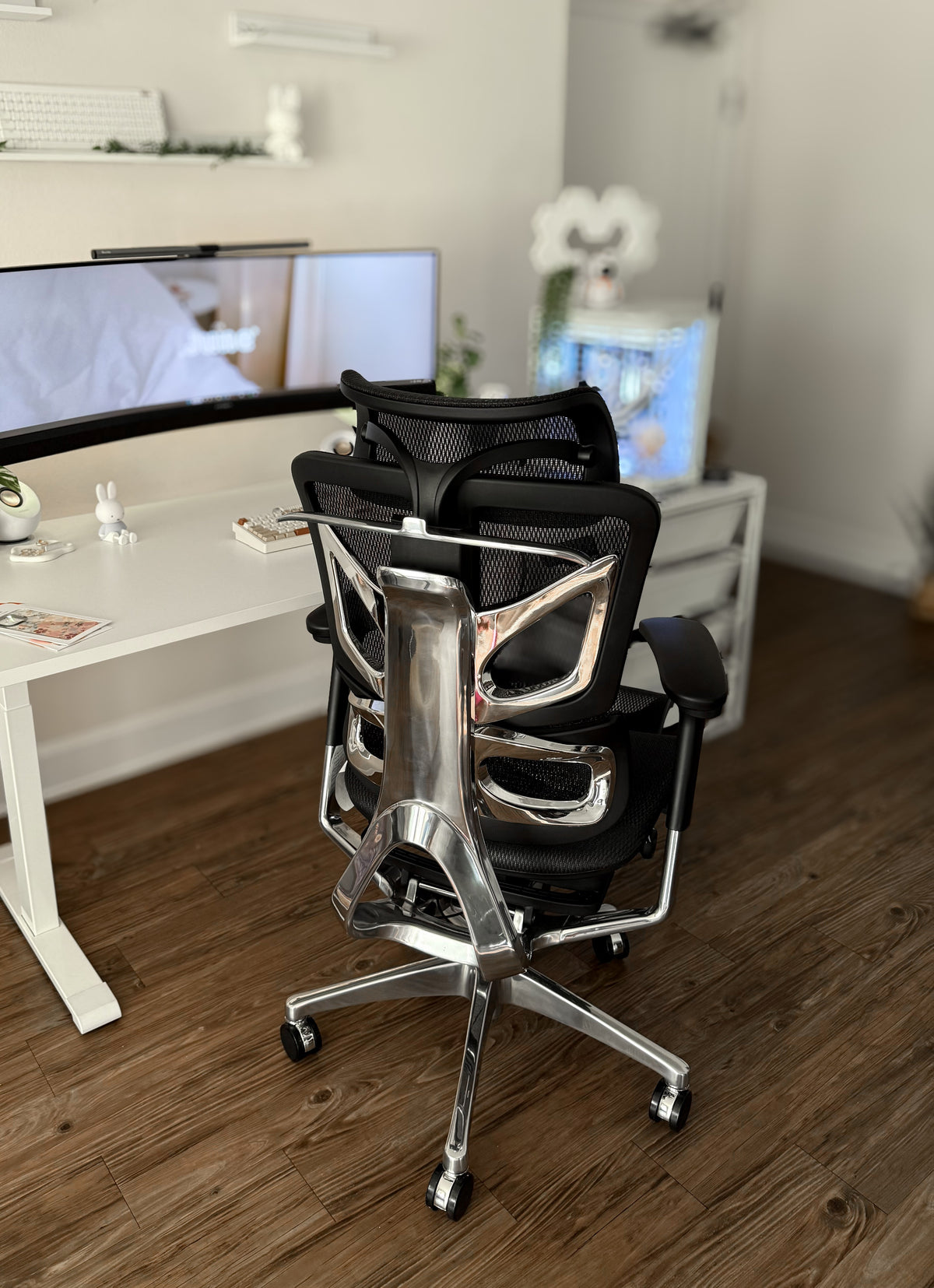
OdinLake provides a wheel-replacement guide for the general replacement sequence and a separate guide explaining how office-chair wheels are removed. Use the chair's model-specific instructions when they differ from a general guide.
The store also lists replacement casters for selected O1, O2, and O3 chairs. Confirm the exact model, current caster specification, stem fit, complete set, and intended floor application before ordering. If the listing and manuals do not answer the floor-compatibility question, send the chair model and flooring details to OdinLake support. The floor manufacturer remains the authority on what may contact its finish.
Frequently Asked Questions
Do office chair wheels scratch hardwood floors?
They can. Hard or damaged casters, embedded grit, a wheel that drags, and repeated rolling in one path can mark the finish or wood. Clean the floor and wheels, verify caster compatibility, and use an approved protection layer when preserving the finish is the priority.
Do I need a chair mat on hardwood?
Not every floor manufacturer requires one, but a compatible hard-floor mat provides the clearest physical barrier. It is especially useful for delicate finishes, heavy daily use, uncertain caster compatibility, or rooms where grit is difficult to control. Check the flooring warranty before deciding.
What type of chair mat is safe for hardwood floors?
Use a mat explicitly labeled for hard floors and approved for your exact flooring and finish. It should have the specified smooth or non-cleated underside, support the occupied load, cover the full caster path, lie flat, and use a backing the floor manufacturer allows.
Are rollerblade-style office chair wheels safe for hardwood?
Soft, wide polyurethane wheels may reduce concentrated contact, but the style alone is not a guarantee. Confirm the floor maker allows direct rolling, the caster fits the chair and load, and the new diameter does not create poor seat fit or uncontrolled rolling. Keep the treads free of grit.
Can an area rug protect hardwood from an office chair?
It can separate the wheels from the wood when the rug, pad, and backing are compatible with the finish and suitable for rolling-chair traffic. The rug must stay flat and cover the whole travel zone. Stop using it if it shifts, catches casters, traps soil, or changes the floor's color.
How large should a hardwood-floor chair mat be?
It should contain every caster during real work, side reaches, rolling back, standing, and entering or leaving the desk. Measure the occupied travel zone instead of only the chair base, then add enough margin to prevent routine edge crossings.