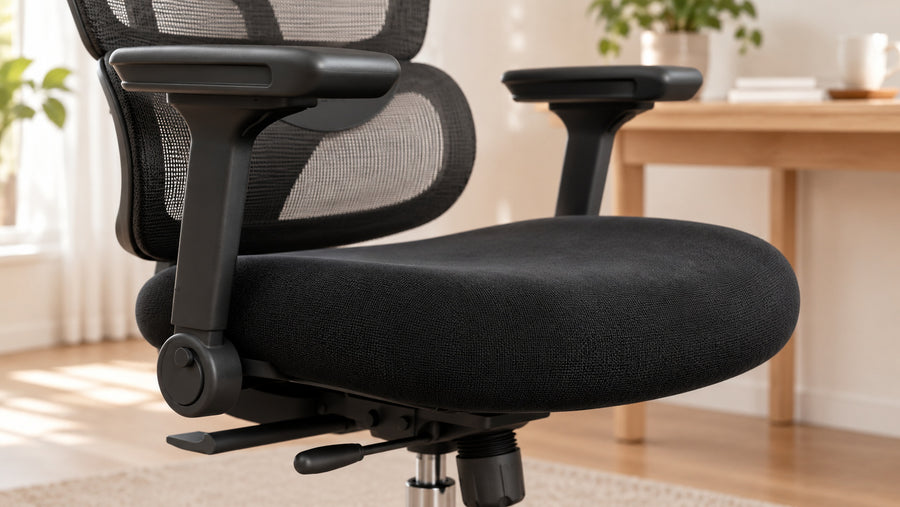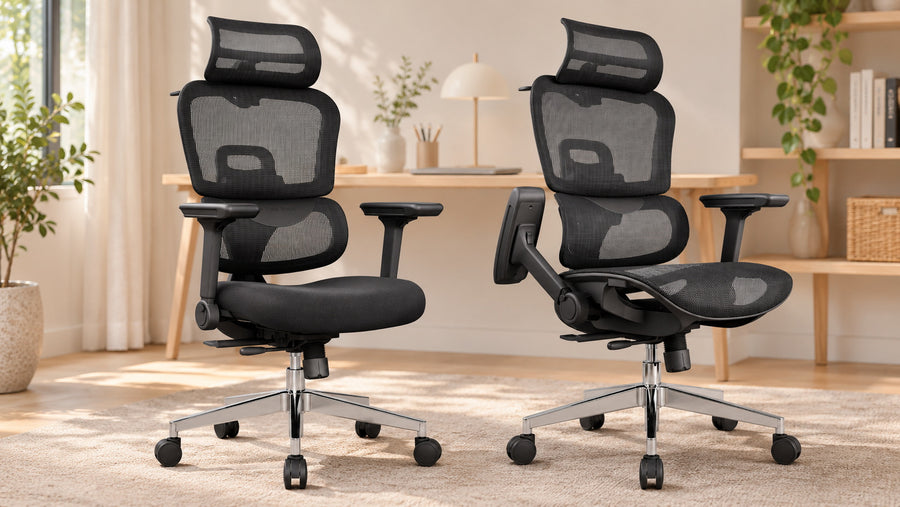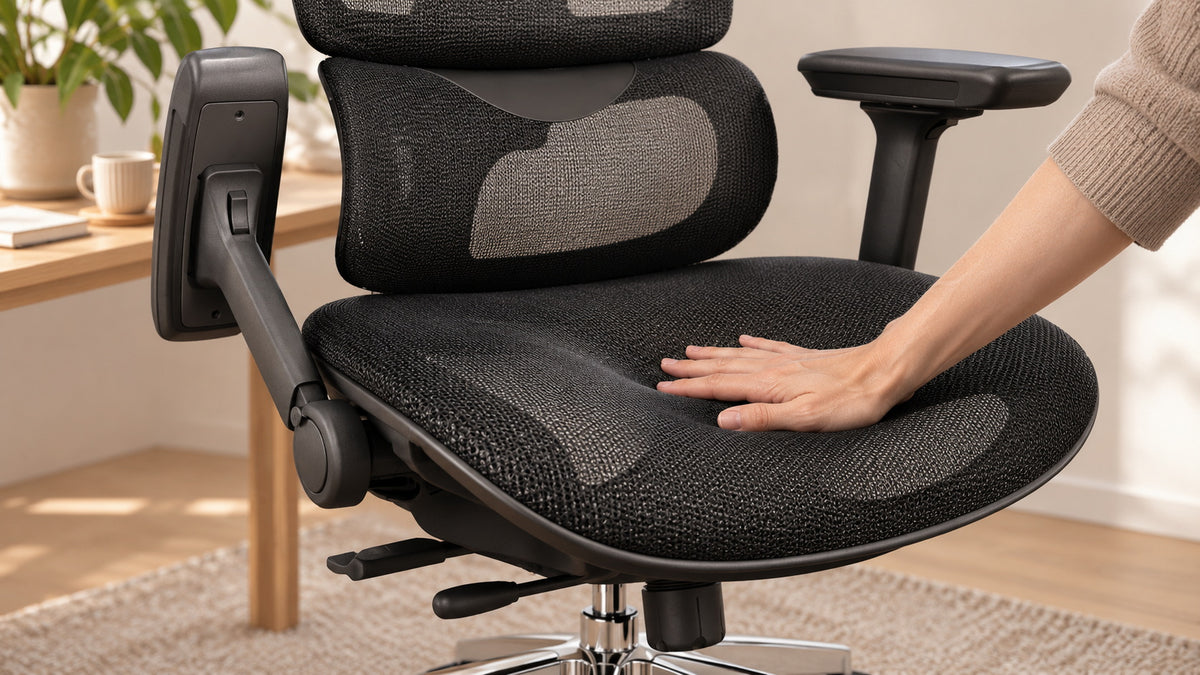
The right ergonomic setup should adapt to your body, support frequent movement, and stay comfortable through a full workday.
Mesh office chair seats can lose tension with use, but a seat dipping beneath someone’s weight is not automatically a sign of wear. A suspended surface needs some flexibility to accommodate the person sitting on it.
The useful distinction is whether the mesh moves normally under load or has developed a lasting change. A new low spot, a loose edge, or contact with the structure beneath the seat deserves closer attention than an ordinary contour that has always been there.
If you own a mesh chair such as the OdinLake L3 FlexBreath, start by identifying what has changed. That makes it easier to distinguish a surface problem from a change in the seat mechanism or the chair’s height.
Normal Flexibility or a Lasting Dip?
A suspended mesh seat yields when you sit down. It may also have a shaped profile while empty, so a perfectly flat surface is not a universal standard for judging its condition.
Compare the chair with its own earlier appearance and feel. Does the empty seat sit lower in one area than it used to? Has a particular section become noticeably loose? Do you now feel a frame or support beneath you that was not apparent before?
For example, a seat that dips while occupied and returns toward its usual profile afterward is behaving differently from one with a persistent hollow. If that hollow also changes where your body makes contact, it is worth investigating.
Inspect the seat without someone sitting on it. View the whole surface from the front and side rather than relying on a close-up of the middle. Shadows can make contours appear deeper, so use reasonably even lighting.
An earlier photograph can help, but it is not essential. Your description of a new change also matters: when you first noticed it, where it appears, and whether it affects sitting comfort. You do not need to keep pressing the mesh to demonstrate that it stretches.
Identify Which Part of the Chair Is Moving
People sometimes describe several different problems as a “sagging seat.” Before assuming the mesh is responsible, look at what actually moves.
If the mesh surface has a new low point but the frame remains level, the issue may involve the fabric or its attachments. If one edge appears displaced, inspect that area visually for an obvious separation or developing tear.
If the complete chair gradually lowers relative to the desk, the lift mechanism may need attention. That is different from mesh losing tension. Likewise, a seat assembly that rocks or tilts unexpectedly may involve its mounting or mechanism rather than stretched fabric.
You do not have to diagnose an internal fault. A simple description such as “the chair gets lower while I work” or “the left side of the mesh stays loose when the seat is empty” is more useful than assuming both problems need the same repair.
Also distinguish a new defect from an existing fit problem. If you have always felt the front edge while sitting, seat shape or adjustment may be the issue. If the contact appeared only after the surface changed, that gives support a different starting point.
Stop using a seat with a visible tear, a separating attachment, or unexpected instability until you receive appropriate guidance. Those signs warrant attention even if the chair remains comfortable for a few minutes.
Where FlexBreath’s Durability Design Fits
The OdinLake L3 FlexBreath uses elastic mesh designed for responsive support and has undergone 120,000+ test cycles for bounce-back performance. That is relevant product information for someone considering a flexible mesh seat.
The count should not be converted into a fixed lifespan or a promise that no seat can ever develop a problem. For an owner assessing a change, the condition of the actual chair remains the immediate concern.
The practical benefit of elastic mesh is its ability to give as you sit and move. That normal movement should be distinguished from a persistent loss of tension. A seat does not need to feel rigid to be functioning properly.
For the L3, evaluate how the surface supports you during your usual tasks and whether its unloaded profile has changed. A responsive feel from the beginning is a preference characteristic; a newly loose area is a condition to investigate.
This keeps the durability information in proportion. It explains part of the product’s design without replacing the straightforward checks that help an owner describe a specific issue.
What to Do if the Seat Has Changed
Take a photograph showing the whole seat and another showing the affected area. Include the frame so it is clear where the change sits relative to the structure.
Write down whether the problem affects appearance, comfort, height, or stability. If you can feel the structure beneath the mesh, describe where and whether it happens in your normal seated position.
Contact support with the exact chair model and those observations. Ask which inspection or replacement options apply to that seat assembly. A fabric problem does not automatically mean replacing the whole chair, but the available remedy depends on its construction and condition.
Avoid trying to tighten the mesh with heat, improvised fasteners, or an adjustment intended for another mechanism. A recline-tension knob controls reclining resistance; it should not be assumed to retension the seat fabric.
Continue following the chair’s normal care instructions. Do not stand on the mesh or use the seat to support concentrated loads. If the issue is structural, placing a cushion over it does not address the underlying problem.
The useful outcome is a clear next step. Normal flex can remain part of a comfortable mesh seat. A lasting dip or damaged attachment calls for model-specific assessment, rather than a guess at how to pull the fabric tighter.
FAQ
Does a looser-feeling seat always mean the mesh has stretched?
No. A change in the mechanism, an attachment, or the way you are positioned can alter the overall feel. Check whether the surface itself has changed and describe what moves before deciding which component is responsible.
Can the seat mesh be replaced separately?
That depends on the model and how its seat is assembled. Some repairs involve a complete seat assembly rather than fabric alone. Ask about compatible parts before buying replacement mesh or removing the existing material.