Quick answer
The right ergonomic setup should adapt to your body, support frequent movement, and stay comfortable through a full workday.
For millions of remote workers and office professionals, a seat at the desk isn’t just a place of productivity—it’s a source of dread. According to data from Harvard Health Publishing, up to 40% of people will experience sciatica at some point in their lives. If you are one of them, you know the sensation all too well: a sharp, electric shock, or a dull, burning ache that radiates from your lower back, through your hip, and down your leg the moment you sit down.
When you live with sciatica, standard reviews of "comfortable chairs" mean nothing. You don't need a chair that simply looks good or feels plush for the first five minutes. You need an ergonomic solution engineered to stop active nerve compression.
Why Ordinary Chairs Are an Enemy to Your Sciatic Nerve
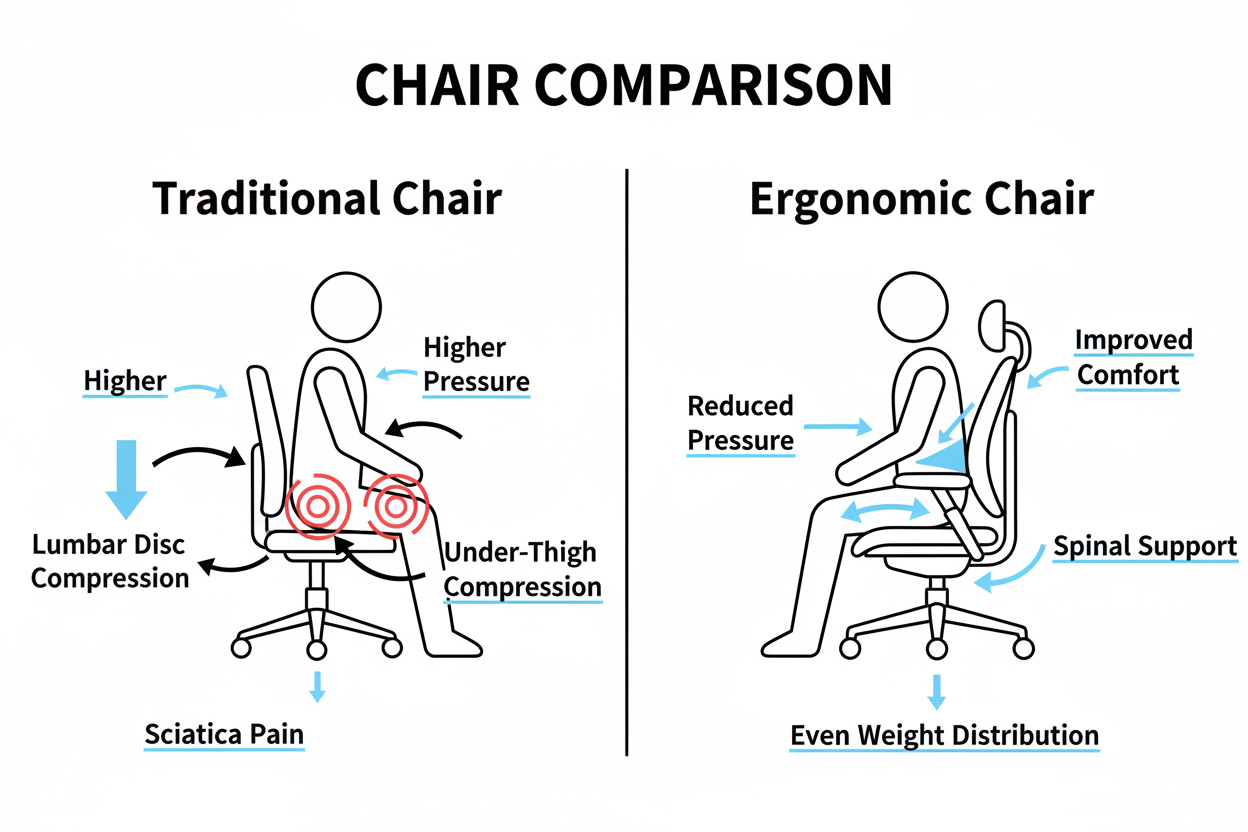
The sciatic nerve is the longest and thickest nerve in the human body. When you sit on a poorly designed traditional chair, two destructive physical forces happen simultaneously:
-
Severe Lumbar Disc Pressure: Biomechanical studies show that slumping into a "C-shape" posture on standard office chairs increases pressure on your lumbar discs by up to 185% compared to standing. This intense pressure forces the discs to bulge outward, pressing directly onto your sciatic nerve root.
-
Direct Thigh Compression: Flat, stiff seat cushions act like a blunt vice, pressing against the back of your thighs. This local pressure restricts blood flow and irritates the piriformis muscle and sciatic nerve pathway. Within 30 minutes, numbness and burning set in.
The Science of Relief: What OdinLake Ergonomic Chairs Bring to the Table
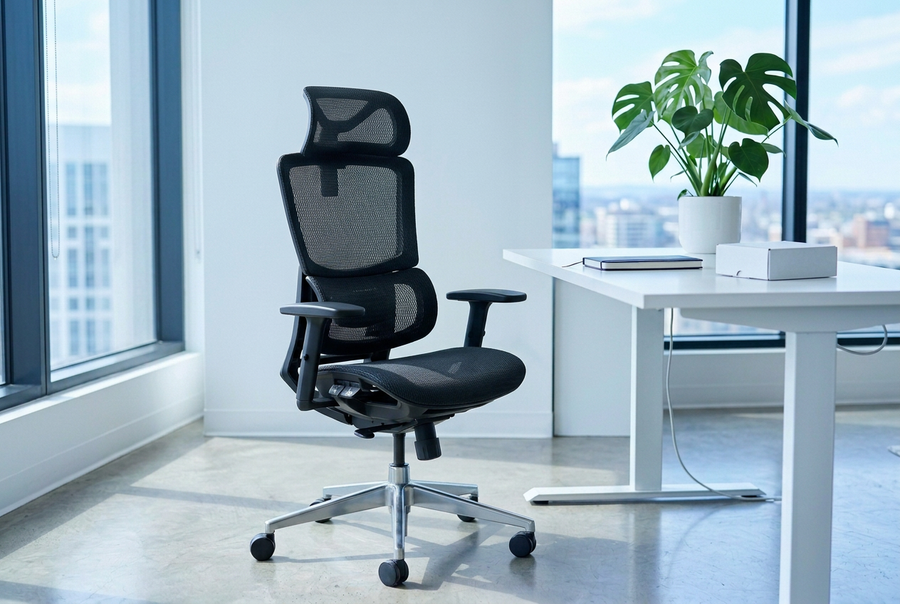
An advanced ergonomic chair doesn’t cure sciatica, but it alters the physical environment of your spine to allow healing to happen while you work. Here is how our engineering relieves the pressure:
-
Dynamic Lumbar Support System: Instead of a static plastic back, OdinLake features a responsive lumbar support that fills the natural "S" curve of your spine. By actively pushing your pelvis slightly forward, it reduces disc pressure, lifting the weight off the compressed nerve.
-
The Waterfall Seat Edge Design: The front slope of the seat is engineered with a downward slope (a "waterfall" curve). This critical angle removes the hard edge pressure from your hamstrings, ensuring unhindered circulation and preventing the dreaded leg numbness.
A Sciatica Sufferer’s Guide: How to Choose Your Next Chair
If you are shopping for relief, do not look at aesthetics. Look for these three non-negotiable features:
-
Adjustable Seat Depth: If a seat is too deep, it will press against the back of your knees, aggravating the sciatic nerve. If it is too shallow, your thighs won't have enough support, overloading your sit bones. You must be able to adjust the seat pan to leave a 2-3 inch gap behind your knees.
-
Sync-Tilt Mechanism: Static sitting kills. Look for a chair where the backrest recline opens up your hip angle (ideally a 2:1 ratio between back recline and seat tilt). Opening the hip angle instantly reduces the tension on the sciatic nerve.
-
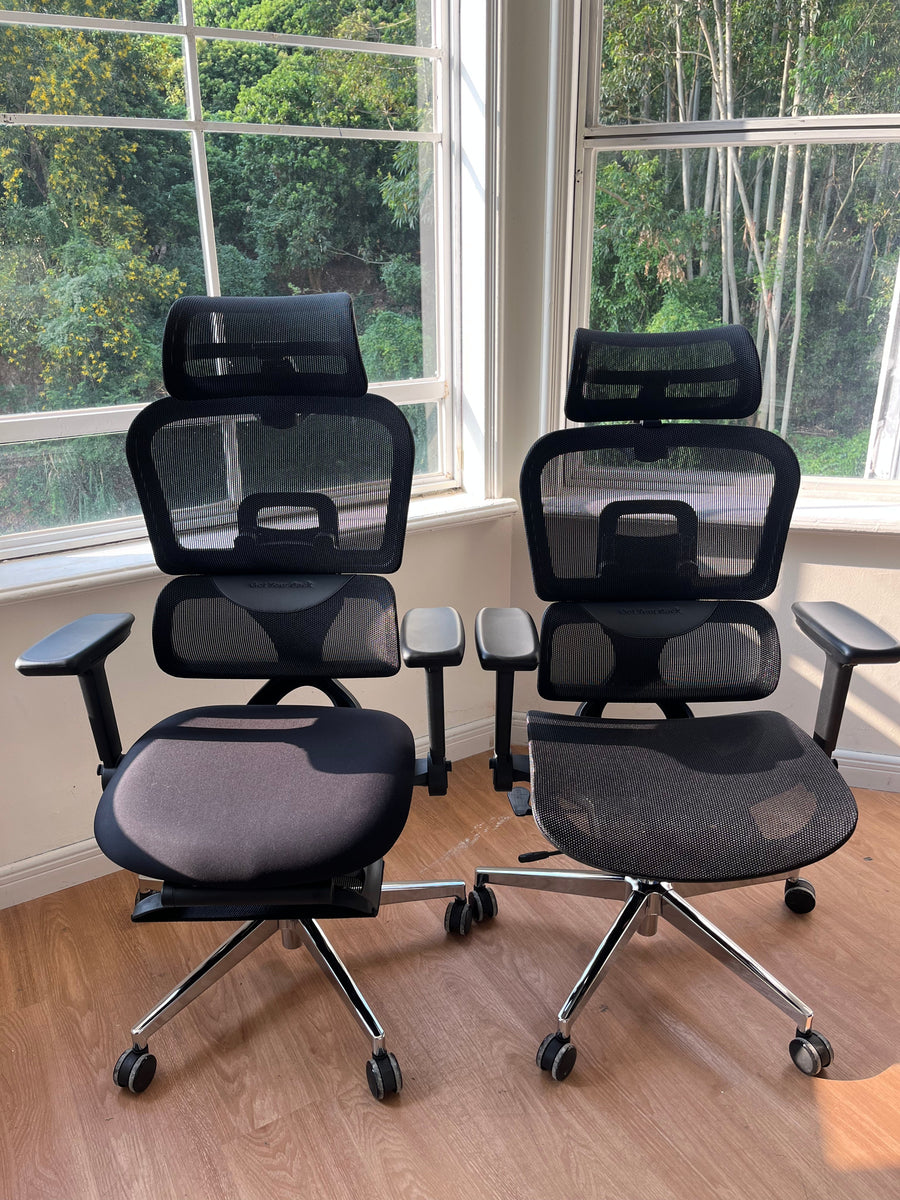
Adaptive Mesh Tension: Avoid foam cushions that bottom out over time, causing bone-on-nerve pressure. High-elastic German mesh provides a suspended, weightless sitting experience that distributes pressure evenly across your hips.
FAQ: Sitting Comfortably with Sciatica
Q: How often should I recline the chair if I have sciatica?A: Every 45 minutes, unlock the tilt mechanism and recline at a 110° to 120° angle for 5-10 minutes. This redistributes your body weight from your spine to the chair's backrest, giving your discs a much-needed break.
Q: Can a soft cushion help with sciatica pain?A: Counterintuitively, no. Extremely soft cushions allow your pelvis to sink and tilt backward, flattening your lumbar curve and worsening nerve pinch. You need firm, contouring support.