Two years of near-zero sales. Three early chair models that didn't make it. In this founder essay, Lex Zhao reflects on what patience really means when you're building an ergonomic chair company — and what slow, consistent commitment actually builds over time.
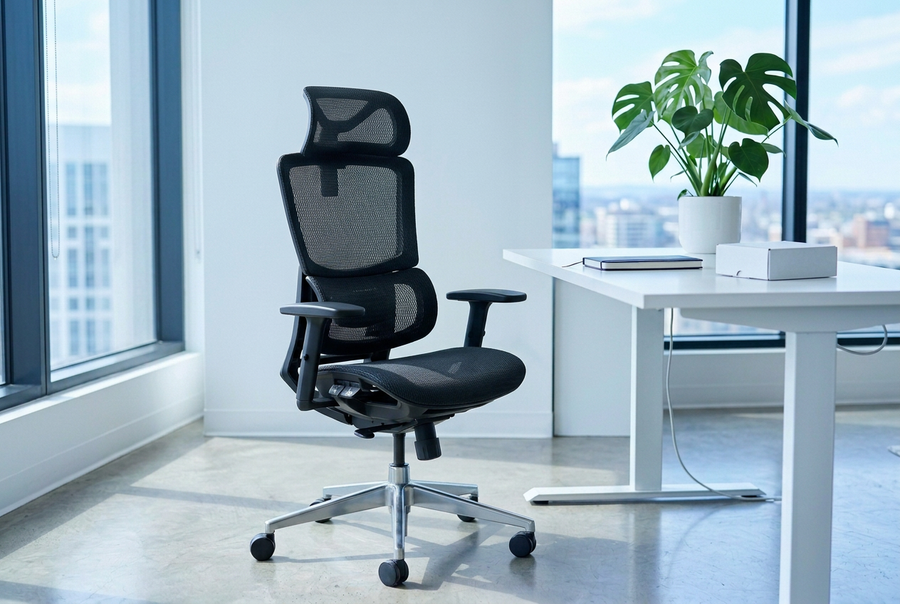
The right ergonomic setup should adapt to your body, support frequent movement, and stay comfortable through a full workday.
By Lex Zhao | Founder, OdinLake
Most people assume building a product company is mostly about having the right product. I thought so too. What I didn't expect was spending two years waking up every morning, opening my dashboard, and staring at numbers that barely moved.
Some days: a few visitors, no sales. Some days: nothing at all.
That was my reality at the beginning of OdinLake — and it taught me more about patience than anything else in my life.
Here's the context that made it feel urgent enough to keep trying: according to the U.S. Bureau of Labor Statistics (American Time Use Survey), civilian workers now spend an average of 3.55 hours per day sitting at work — and for full-time desk workers, that number is far higher. Research published in BMC Public Health (2018, based on a study of nearly 45,000 employees) found that sitting almost all the time at work without breaks is associated with significantly increased risk of poor general health and back and neck pain. A separate meta-analysis covering 27 studies (PubMed, 2015) concluded that prolonged sitting time raises the risk of low back pain by 42% compared to less sedentary work. This is the problem I set out to solve. Not a niche problem — a structural one, affecting hundreds of millions of people whose work has quietly become synonymous with sitting.
The Dashboard That Almost Broke Me
In the early years, every day I opened my analytics. Every day the numbers told the same story: almost no one was buying. I'd watch a visitor land on the product page, spend a few seconds, and leave. Then another. Then another.
I started asking myself every question a founder shouldn't spiral into all at once:
Is the product actually good enough? Is the website not clear enough? Are the photos wrong? Is the price too high? Am I running the wrong ads? Or — the question that cuts deepest — am I just not capable enough to make this work?
This wasn't a bad week. This wasn't a rough quarter. This was two years of near-zero momentum, every single day.
The honest truth: there were mornings I didn't want to open my laptop.
But something useful came out of that pressure. Instead of walking away, I went back to the product. If the market wasn't responding, maybe the product wasn't ready yet. That decision — to treat the low period as a signal to improve rather than a reason to quit — is what led to everything that came next.
The Products That Didn't Make It — And What They Taught Us

When OdinLake launched, we had three models: the 625, the 643, and the 633.
The 625 was our entry-level chair. It looked right. It felt reasonable in a short sit-test. But the feedback was consistent: the dimensions were too small for most users. It wasn't a quality issue — it was a design assumption we'd gotten wrong about how people actually sit. We phased it out.
The 643 was more painful. I want to be clear about something: the 643 was not a cheap chair. The materials were solid — we didn't cut corners on build quality. But after months of real-world use, a structural problem emerged that I couldn't rationalize away: the backrest would crack and, in some cases, break. It was a design flaw in the frame geometry, not a shortcut in materials. The structure simply couldn't handle the cumulative stress of daily long-term use the way we needed it to. We discontinued it.
When customers who had purchased the 643 contacted us about the issue, we resolved every case — replacements, refunds, whatever the situation called for. Not because we were required to. Because a customer who trusted us with their daily comfort deserved to be treated that way. That is how we operate, and it always will be.
The 633 stayed — it was a more conservative design and it held up. But I spent a long time sitting with the reality that two out of our first three products had failed in ways that mattered to real users.
What those failures taught me was something I couldn't have learned from research alone: understanding what users actually need — in the body dimensions they have, over the hours they sit, day after day — that knowledge only comes from real-world use and honest feedback. You cannot shortcut your way to it.
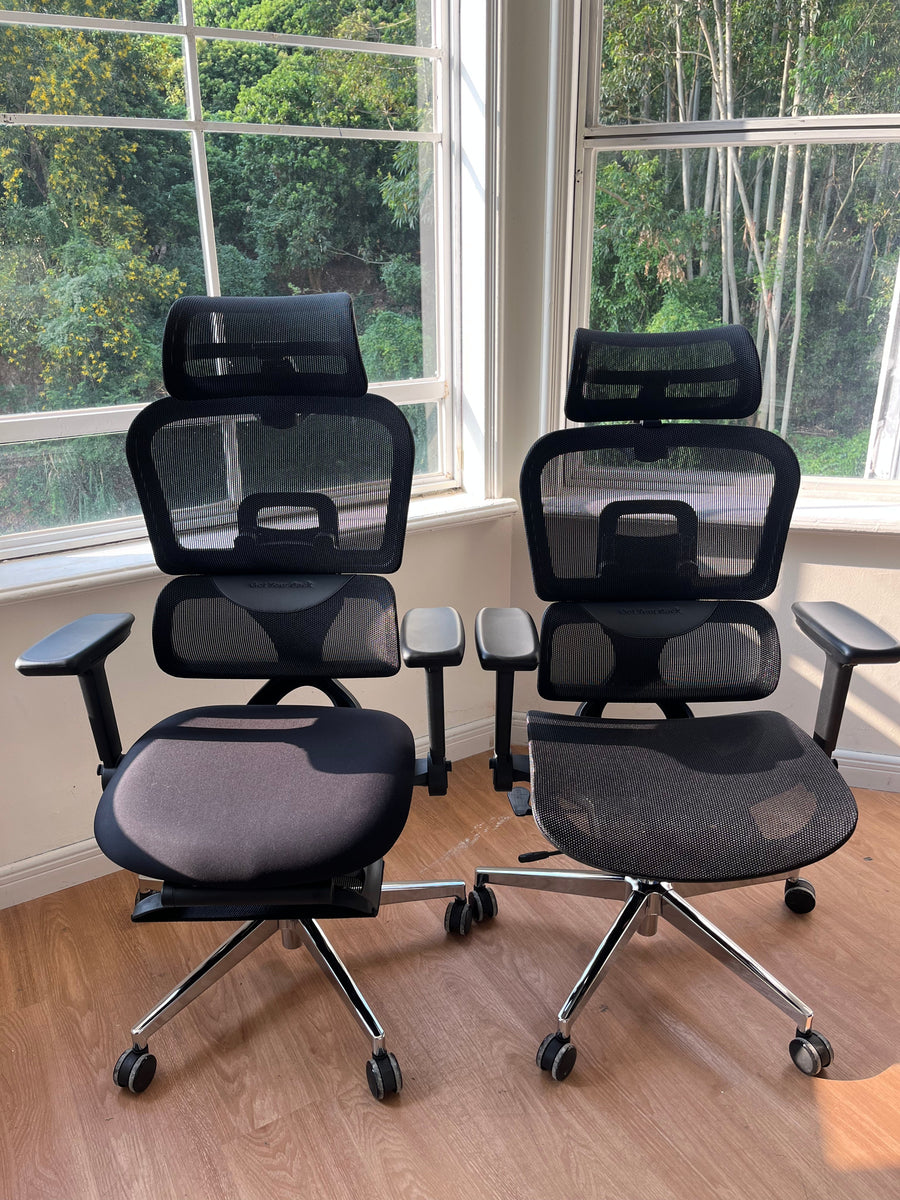
The 625 taught us to stop assuming. The 643 taught us that even with good materials, structural design is everything. Both failures together pointed us toward what eventually became the OdinLake O3 (Ergo BUTTERFLY 753), the OdinLake O2 (Ergo MAX 747), and the OdinLake O1 (Ergo PLUS 743) — chairs designed from the ground up with everything we'd learned from getting it wrong.
Slow, in retrospect, was fast. The years we spent getting it wrong were not wasted — they were load-bearing.
What "Slow" Actually Builds

Around year three, something shifted.
Not dramatically — not a viral moment or a single campaign that changed everything. Just a steady, compounding increase in people who found us, evaluated carefully, and chose to trust us. Some of them took the time to leave reviews on their own. Emails arrived from customers who had no reason to reach out except to say thank you, to tell us the chair had made a difference to their back, their focus, their workday.
One message I received stayed with me. A customer explained that his wife's office chair had become uncomfortable, and she had been dealing with back problems for some time — she used a standing desk both at home and at work, but still needed the right chair for the hours she did sit. He had started searching Google and was overwhelmed by the options. He didn't want mesh. He wanted adjustability above everything else. He made a shortlist of eight to ten chairs and showed them to his wife. She didn't tell him which one she preferred — only that OdinLake was one of three brands she found credible. He went deeper into the research, saw that adjustability was genuinely central to how we build our chairs, and ordered the OdinLake O2 (Ergo MAX 747) for her.

That message mattered to me not because it was a sale, but because of what it described: a careful, skeptical buyer doing real research, and arriving at us because the product held up to scrutiny. That is exactly the customer we had been building for during those two silent years.
That's what patience actually builds — not just a customer base, but a base of customers who chose you for the right reasons. Customers you acquire through urgency or discounts are transactional. Customers who find you slowly, evaluate carefully, and then choose you because they believe in what you're building — those are the ones who write the honest reviews, send the thoughtful emails, and recommend you to their colleagues.
The two-year low period wasn't dead time. It was the market quietly filtering for the right customers, and us quietly becoming worthy of them.
Patience as a Quality Standard
One of the clearest expressions of patience at OdinLake isn't a mindset — it's a process.
Every single chair we ship goes through a full individual quality inspection before it leaves our facility. Not batch testing. Not random sampling. Every unit, every time.
Most manufacturers don't do this. It's slow. It adds cost. It creates bottlenecks that are genuinely frustrating to manage at scale.
We do it anyway — because the alternative is shipping a chair with a defect to someone who sits in it for ten hours a day and trusted that we'd done our job. I've already learned what it costs to get that wrong. The 643 taught me.
150,000 cycle tests per model. Full individual inspection per unit. These aren't marketing numbers — they're the operational expression of a belief that long-term trust cannot be shortcut.
Patience, in manufacturing terms, means refusing to move faster than your quality standards allow.
"Got Your Back" — The Promise I Made to Myself First
OdinLake's tagline is Got Your Back. Most people read it as something we say to our customers — that we'll support them, stand behind the product, be there after the sale.
That's true. But during those early years, the phrase meant something else to me.
It was the promise I made to myself: that I would keep showing up even when the results weren't there yet. That I would stay behind my own product, my own decision to build this, my own belief that long-term stable support mattered more than short-term comfort — in chairs, and in building a company.
Patience isn't waiting for something to happen. It's continuing to act correctly while you wait.
Three Questions for Anyone Who's Thinking About Quitting
If you're in a slow period — building something, or working on something that isn't moving the way you expected — here are the three questions I still ask myself:
- Do I genuinely believe this product or work helps the person it's meant for? Not "do I think it's good" — do I believe it makes a real difference to someone's real life?
- Am I not getting results because of what I'm building, or because I haven't been seen yet? These require completely different responses. One means change course. The other means keep going.
- If I look back five years from now, will I respect the decision I'm making today? This is the only question that reliably cuts through short-term noise.
The market will eventually catch up to the right product. The only risk is not being there when it does.
Lex Zhao is the founder of OdinLake, an ergonomic chair company focused on long-term stable support for people who spend 8–12 hours a day at a desk. He writes about building, patience, and what it actually means to design for health — not just comfort.