A practical U.S. decision guide for repairing, donating, recycling, or discarding an office chair while keeping its gas-lift cylinder intact.
The right ergonomic setup should adapt to your body, support frequent movement, and stay comfortable through a full workday.
You may be allowed to throw away an office chair, but regular trash should be the last route you check—not the first. A chair that is safe and functional may be repairable, resellable, or donatable. A chair that is no longer usable may qualify for a furniture recycler or scheduled bulky-waste pickup. The correct option depends on the chair’s condition and the rules where you live.
Before moving it, photograph the model label and inspect the chair without taking it apart. If it has a pressurized gas-lift cylinder, keep that cylinder intact: do not drill, cut, heat, open, or vent it. Then ask the receiving organization or local waste program whether it accepts the whole chair and its gas lift.
First, Decide Whether the Chair Is Safe to Pass On

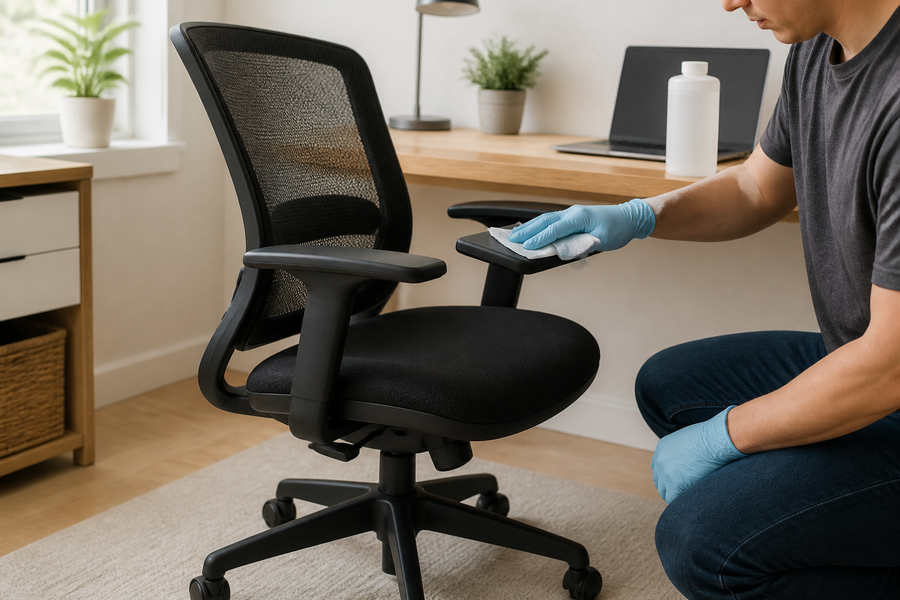
Donation and resale extend a chair’s useful life only when the next person receives a chair that is reasonably safe, clean, and honestly described. Start with the chair unoccupied and in good light. Do not sit in an unstable chair to test it.
| Condition | Eligible next route | Do not do this |
|---|---|---|
| Stable, clean, complete, and all essential adjustments work | Keep, resell, give away, or ask a donation organization | Promise acceptance before the recipient confirms its policy |
| Minor model-specific wear, with no cracked or bent load-bearing part | Ask the manufacturer about a compatible part or qualified service | Fit a random cylinder, base, caster, or fastener because it “looks close” |
| Cracked base, loose seat connection, major lean, severe corrosion, fire or heat exposure, or visible cylinder damage | Remove from service; ask the manufacturer and an appropriate local facility for handling instructions | Donate, resell, keep testing, or dismantle the gas lift |
| Infestation, heavy contamination, or material that cannot be made hygienic | Follow local sanitation or waste guidance | Donate or leave it where another person may take it unknowingly |
| Model appears in a product recall | Follow the recall remedy and disposal instructions | Resell or donate it instead of completing the remedy |
Search the exact brand, model, and identifying number in the U.S. Consumer Product Safety Commission recall database. A recall notice can specify a repair, refund, replacement, return, or disposal process that should take priority over a generic furniture-disposal plan.
Use the Highest Useful Exit Route
The U.S. Environmental Protection Agency’s materials and waste management hierarchy puts source reduction and reuse ahead of recycling and disposal. Its current consumer guidance also recommends considering repairing furniture before discarding it. For an office chair, that principle becomes a practical five-route sequence.
1. Repair it when the fault is specific and the structure is sound
A stuck caster, missing arm pad, worn seat component, or failed adjustment may be repairable when the manufacturer supplies the exact part and procedure. A cracked frame, bent load-bearing component, damaged gas cylinder, or unidentified instability is different: remove the chair from use and ask for model-specific guidance.
For an OdinLake chair, record the model and photograph the complete chair plus the affected area before using the OdinLake Help Center or contacting customer support. This gives the support team enough context to distinguish a serviceable component from a chair that should be retired. Replacement parts are not universally interchangeable, even when two components appear similar.
2. Resell, give away, or donate it when it is ready for another user
A reuse-ready chair should be stable, clean, complete, free of infestation, and suitable for normal adjustment. Photograph cosmetic wear, name any function that does not work, include the model, and disclose relevant history such as repairs or a missing accessory. Never make the recipient discover a safety problem after pickup.
Call the donation organization before transporting the chair. Acceptance can depend on condition, current need, storage space, upholstery policy, and drop-off capacity. A refusal does not prove the chair belongs in the trash; it only means you need to check the next route.
3. Ask a furniture or material recycler about the whole chair
Office chairs combine metal, plastic, fabric or mesh, foam, casters, fasteners, and sometimes a sealed gas lift. A material may be recyclable in isolation while the assembled chair is not accepted by a particular program. The EPA advises checking what the local program collects and provides a recycling-location starting point; it also notes that metal-recycling options vary by locality.
Do not place a whole chair in a curbside recycling cart unless the program explicitly says to do so. Ask whether the facility accepts office chairs intact, whether it accepts a chair with its pressurized cylinder still installed, and whether it wants any preparation performed by its own staff.
4. Schedule bulky-waste pickup when your local program accepts furniture
Many communities separate furniture from routine household trash, but their definitions, appointment rules, fees, set-out locations, and item limits differ. Use your city, county, Tribal, or contracted sanitation provider’s official page. Search for “office chair,” “furniture,” and “bulky waste,” then confirm the address or ZIP code served before scheduling.
Do not leave a chair at the curb merely because a neighboring city collects furniture. Unscheduled set-out can create a sidewalk hazard and may violate local rules. Follow the program’s date, placement, labeling, and preparation instructions exactly.
5. Use regular trash only after the local provider confirms it
If repair, reuse, recycling, and bulky collection are unavailable, ask the local solid-waste provider whether the chair is permitted in regular trash. Confirm size limits and how it handles an intact gas-lift assembly. “It fits in the bin” is not the same as “the program accepts it.”
Document the Chair Before Handoff

You can usually get a more reliable answer from a manufacturer, charity, recycler, or sanitation provider when you send the same compact set of facts:
- Identity: brand, exact model, serial or batch number, and approximate purchase date.
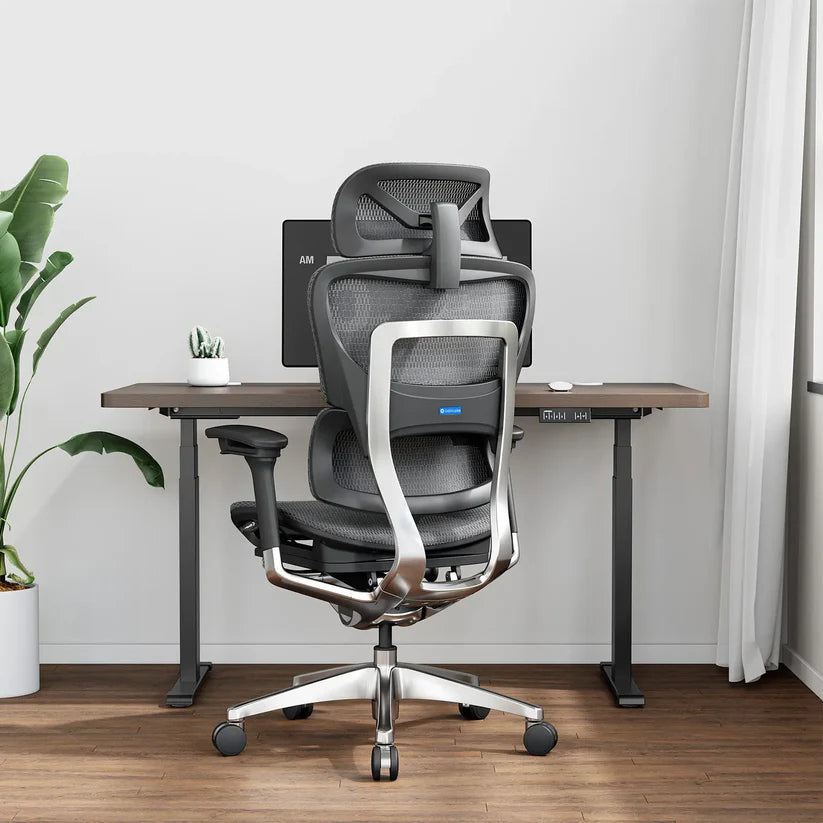
- Whole-chair view: one photo showing the seat, back, arms, base, and all casters.
- Condition: whether it rolls, swivels, raises, lowers, reclines, locks, or wobbles—without repeatedly testing an unsafe chair.
- Defect view: close photos of cracks, missing parts, stains, corrosion, or the area that behaves differently.
- Location and volume: ZIP code and the number of chairs, because a single household chair and an office clear-out may follow different routes.
This packet prevents a common disposal mistake: choosing a route based only on appearance. A clean chair may still have a structural defect, while a worn-looking chair may only need a replaceable, model-specific component.
Confirm Acceptance Before Moving the Chair
- Do you accept this office chair in its current condition? Describe damage and contamination honestly.
- Do you accept the chair whole with the gas-lift cylinder installed? Do not assume a general “metal accepted” notice covers an assembled chair.
- Is it drop-off, scheduled pickup, or curbside collection? Confirm service area, appointment, fee, and item limit.
- What preparation do you require? Follow only the receiving program’s written instructions, and do not perform a dangerous step yourself.
Write down the organization, date, person or page consulted, and instructions received. If one provider says no, keep the chair secured from use and move to the next verified route instead of abandoning it.
Keep the Gas-Lift Cylinder Intact
A height-adjustable chair’s cylinder is a sealed, pressurized component. It is not an ordinary empty metal tube. Workplace seating guidance from the UK Health and Safety Executive notes that gas-pedestal chairs contain compressed gas and says users should not examine or repair a chair that suddenly wobbles or tips; the supplier should be contacted. Gas-spring manufacturers SUSPA and Stabilus likewise warn against unauthorized opening, impacts, heating, and modification.
- Do not drill, puncture, saw, grind, crush, weld, heat, burn, open, or intentionally vent the cylinder.
- Do not strike the pressure tube or clamp it in a vise to separate parts.
- Do not copy industrial depressurization instructions intended for trained facilities.
- Do not label every chair cylinder “household hazardous waste” on your own; ask the local facility how it classifies and accepts the complete item.
- If a recycler requires separation, ask whether its staff performs it or whether the manufacturer can direct you to qualified service.
The safe consumer task is identification and routing, not pressure-vessel processing. Keep people away from a damaged chair, avoid further adjustment cycles, and let the receiving facility define its handling process.
If You Are Disposing of Several Office Chairs
For an office refresh, begin with an inventory instead of a dumpster. Record model, quantity, working condition, defects, and location. Then divide the chairs into four streams: internal redeployment, verified resale or donation, manufacturer-supported repair, and recycler or commercial furniture-removal review.
Ask any vendor for a written scope: what it will reuse, what it will recycle, what it will dispose of, how pressurized chair components are handled, and what documentation it provides. Keep recalled, unstable, contaminated, and reusable chairs physically separated so a damaged chair is not accidentally passed to another worker or recipient.
The same hierarchy applies whether you have one chair or one hundred: preserve safe use where practical, document the handoff, and send the remainder only to a route that has confirmed acceptance. If the chair is structurally sound and worn casters are the only defect, the office-chair wheel replacement guide can help determine whether a documented repair is more appropriate than disposal.
Frequently Asked Questions
Can I put an office chair in the regular trash?
Only if your local solid-waste provider explicitly accepts it in regular trash and confirms the size and preparation rules. Some programs treat chairs as bulky furniture or require scheduled pickup. Ask specifically about an intact gas-lift cylinder rather than assuming that a chair that fits in a bin is permitted.
Can office chairs be recycled?
Some can, but acceptance depends on the facility. Office chairs contain mixed materials and may include a pressurized cylinder, so a curbside program that accepts metal or plastic may still reject the assembled chair. Contact a local furniture or material recycler and ask whether it accepts the whole chair in its current condition.
Can I leave an office chair at the curb?
Only after the official sanitation provider schedules or authorizes curbside set-out. Confirm the service date, placement, item limit, labeling, and preparation rules for your exact address. Leaving it out without approval can obstruct access, expose others to an unsafe chair, or violate local requirements.
Should I remove the gas cylinder before disposing of the chair?
Do not remove, open, cut, drill, heat, or vent it simply to make the chair easier to discard. Ask the receiving recycler or waste provider whether it accepts the chair with the cylinder installed. If separation is required, ask whether trained facility staff or qualified model-specific service should perform it.
Will donation centers accept office chairs?
Some do, but policies and current needs vary. Call first and describe the model, condition, upholstery, and any missing or nonworking feature. Donate only a chair that is stable, clean, complete enough for safe use, free of infestation, and not subject to an unresolved recall.
Is it worth repairing an old office chair?
It may be when the problem is limited to an identifiable, replaceable component and the frame and load-bearing connections remain sound. Compare the correct part, qualified labor, chair fit, remaining wear, and replacement cost. Do not attempt a DIY repair on a damaged gas cylinder, cracked base, bent frame, or unexplained instability.
How should a business dispose of multiple office chairs?
Inventory and sort them first. Redeploy safe chairs, obtain written acceptance from resale or donation partners, ask manufacturers about model-specific repairs, and use a commercial recycler or furniture-removal provider for the remainder. Require a clear scope for reuse, recycling, disposal, and pressurized-component handling, and retain the handoff record.