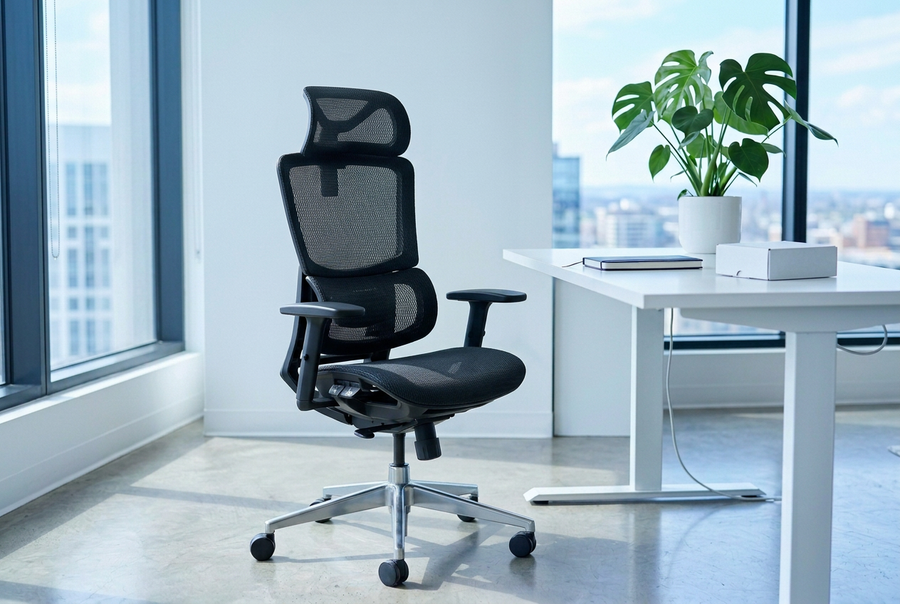
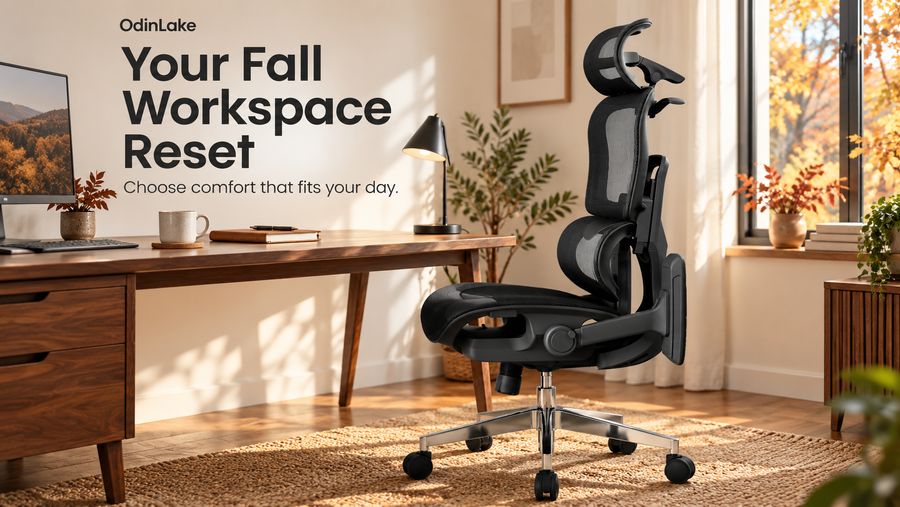
Mesh or foam: which office chair seat is right for you? Explore seven essential checks, from airflow and seat feel to fit, lumbar support, material quality, and warranty. Compare the OdinLake L3 FlexBreath® Mesh and CozyCloud™ Foam options to find the seat that suits your comfort preferences and workday.
Quick answer
The right ergonomic setup should adapt to your body, support frequent movement, and stay comfortable through a full workday.
What Is a Mesh vs Foam Chair?
A mesh office chair uses a tensioned woven material to support the sitter. Depending on the design, mesh may be used on the backrest, the seat, or both. A foam chair uses padding—typically foam beneath fabric or another upholstery—to create a softer seating surface.
When people search for a mesh vs foam chair, the most important comparison is usually the seat. A mesh seat supports through tension and flexibility, while a foam seat supports through foam compression and rebound. Neither construction is automatically better; they create different sitting experiences.
Why Are Mesh and Foam Office Chairs So Popular?
Mesh chairs have become common in home offices because airflow is easy to notice during long work sessions. The open weave can help reduce heat buildup, while a well-designed elastic mesh surface can feel responsive as you shift positions. Mesh also gives many modern ergonomic chairs a lighter, more technical appearance.
Foam chairs remain popular for the opposite reason: familiarity and softness. A padded seat can feel comfortable immediately, especially for shoppers who dislike the firmer sensation of suspended mesh. High-resilience foam can also provide a supportive feel without requiring an extremely hard seat.
Why Do People Choose the Wrong Office Chair?
The first mistake is choosing from a product photo or a single feature. A thick foam may look more comfortable but may feel too warm or too soft for someone who sits for hours. A mesh chair may look supportive but can still be a poor fit if the seat dimensions, edge design, lumbar position, or adjustment range do not suit the user.
The second mistake is treating seat material as the entire ergonomic system. Your seat is only one part of the chair. Seat height and depth, lumbar support, armrest position, recline, backrest movement, body proportions, and desk height all affect how the chair feels. The right buying process therefore starts with your needs and fit, then moves to material and features.
How to Choose Between a Mesh and Foam Chair
Use the seven checks below in order. By the end, you should be able to narrow your purchase to mesh, foam, or a specific chair that offers the seat type you prefer.
-
Start With Temperature: Do You Get Hot While Sitting?
If you regularly feel warm at your desk, start your search with mesh. A woven seat allows more air to move around the body than a thick foam foam. This matters in warm rooms, during summer, or for people who spend much of the day seated.
If heat is rarely a problem and you value a soft surface more than maximum airflow, a foam remains a strong option. Do not choose a foam seat only because it looks thicker; check the fabric and foam construction as well.
Buying direction: Run hot → shortlist mesh first. Prefer warmth/softness → keep foam on your list.
-
Decide What “Comfort” Means to You
Comfort is not the same as softness. Mesh generally feels more suspended and responsive: you sit on a flexible surface that distributes pressure through tension. Foam feels more padded: your body compresses the foam and settles into the seat.
Think about chairs you already enjoy. If you dislike sinking into sofas or thick seats, mesh may feel more natural. If firm or taut seating makes you uncomfortable and you prefer noticeable padding, start with foam.
Buying direction: Responsive and buoyant → mesh. Plush and padded → foam.
-
Check the Seat Dimensions Before the Material
A great material cannot fix a seat that does not fit. Check seat width, seat height range, and usable depth. Your feet should be able to rest comfortably on the floor or a footrest, and the front edge of the seat should not press aggressively behind your knees.
This is especially important when shopping online. Compare the chair dimensions with a chair you already use, and consider your leg length and preferred sitting position rather than relying only on a recommended height range.
Buying direction: Reject any chair that does not fit your body dimensions before comparing mesh vs foam.
-
Look Beyond the Seat: Check Lumbar Support and Movement
For long work sessions, the chair should support more than your hips. Look at how the lumbar area meets your lower back, whether the backrest supports position changes, how far the chair reclines, and whether the armrests can be positioned for your desk.
A premium seat material does not compensate for a backrest that does not fit. If you move frequently while working, a chair with responsive or adjustable support may be more useful than one designed around a single fixed posture.
Buying direction: Prioritize fit, lumbar support, recline, and adjustability before paying extra for a particular seat material.
-
Evaluate Material Quality, Not Just Material Type
Not all mesh and not all foam are equal. With mesh, look for elasticity, even tension, edge construction, and durability testing where available. Poor mesh can feel overly stiff or lose tension. With foam seats, look for foam thickness, resilience, and whether the padding rebounds instead of staying compressed.
Avoid vague claims such as “premium mesh” or “luxury foam” without useful construction details. Specific material information and testing give you more to evaluate than marketing adjectives.
Buying direction: Choose documented construction and material specifications over generic comfort claims.
-
Match the Chair to How Many Hours and How You Sit
If you work, study, or game at the same desk, your chair needs to accommodate position changes throughout the day. Mesh can be appealing for extended sessions because of airflow, while foam can appeal to people who want a softer surface. But neither material guarantees all-day comfort by itself.
For long hours, look for a combination of suitable seat dimensions, lumbar support, recline, armrest adjustment, and a seat surface you personally tolerate well. Frequent movement is also important; no chair should be treated as a reason to stay in one posture all day.
Buying direction: For long sessions, buy the complete ergonomic system—not just the seat material.
-
Check Trial, Warranty, Reviews, and Support Before Paying
Online comfort claims are subjective, so the policies behind the chair matter. Before checkout, check the current return or trial terms, warranty coverage, replacement-part availability, and customer support options. Read reviews for patterns rather than relying on one unusually positive or negative experience.
Also verify the seller's current specifications on the product page before buying. Models, options, pricing, and policies can change.
Buying direction: When two chairs look equally suitable, use support, warranty, trial terms, and documented specifications as tie-breakers.
Mesh vs Foam Chair: Your Final Buying Decision
| Your Priority | Start With | Why |
| Staying cooler | Mesh | Open weave prioritizes airflow. |
| Responsive seat feel | Mesh | Tensioned material feels springier and less padded. |
| Soft, plush feel | Foam | Foam creates more noticeable padding. |
| Traditional padded seating | Foam | Closer to the feel many people already know. |
| Long workdays | Either | Fit, lumbar support, recline and adjustments matter as much as seat material. |
| Unsure | Compare both on the same chair platform | This isolates seat feel from differences in chair geometry and features. |
Best Brand Recommendation: OdinLake
If your main decision is mesh vs foam rather than two completely different chair designs, OdinLake's L3 is a particularly practical model to compare because the same L3 platform is offered with two seat options. That lets you choose the sitting feel without giving up the core L3 ergonomic system.
Choose L3 FlexBreath® Mesh If You Want Airflow and Responsive Support
The L3 FlexBreath® version uses high-elastic mesh designed to distribute hip pressure while keeping the seat breathable. OdinLake states that the mesh has been tested through 120,000+ cycles for bounce-back performance. This is the version to start with if you run warm, prefer a flexible suspended feel, or dislike thick foam beneath you.
Choose L3 CozyCloud™ Foam If You Want a Softer Seat
The L3 CozyCloud™ version uses a 3.15-inch high-resilience foam core with smooth, yoga-inspired fabric. It is the more direct choice for shoppers who already know they prefer padding, want a plusher feel under the hips and thighs, or find mesh seats too taut.
Why the L3 Works Well for This Buying Decision
Beyond the seat choice, the L3 includes an auto-tracking lumbar/backrest design, four recline positions up to 140°, adjustable head support, and flip-back armrests. OdinLake currently lists a suggested height range of 5'3"–6'2" (160–188 cm), a 350 lb (about 159 kg) weight capacity, a 20.5-inch seat width, and an 18.5"–22" seat-height range. Always confirm the latest fit information on the product page before purchase.
Bottom line: If your biggest complaint is heat, start with the L3 FlexBreath® Mesh. If your biggest complaint is a hard or insufficiently padded seat, start with the L3 CozyCloud™ Foam. If neither issue is your main concern, compare fit and ergonomic adjustments first, then use seat material as the final decision.
Buying Checklist Before You Check Out
Do I usually feel hot while sitting?
Do I prefer a responsive seat or a plush padded seat?
Does the seat width and height range fit my body?
Does the lumbar support meet my preferred position?
Can I adjust the armrests and recline for my desk setup?
Does the brand provide useful material specifications?
Have I checked the current trial/return policy and warranty?
Have I compared the chair dimensions with a chair that already fits me?
FAQ: Mesh vs Foam Chair
Is a mesh chair better than a foam chair?
No. Mesh is generally the stronger starting point for airflow and a responsive feel, while foam is the stronger starting point for softness and padding. Your body dimensions, support preferences, and chair design still matter.
Is mesh or foam better for long hours?
Either can work for long sessions. For extended use, prioritize fit, lumbar support, seat dimensions, recline, armrests, and the ability to change positions. Seat material should support those needs rather than replace them.
Do mesh chairs sag over time?
Mesh can lose tension depending on material quality, construction, loading, and use. Look for documented testing and quality construction rather than assuming all mesh performs the same.
Does office-chair foam flatten over time?
Foam can compress with use. Density, resilience, thickness, body weight, and usage patterns affect how quickly its feel changes. High-resilience foam is designed to recover more effectively after compression.
Which should I buy if I am still unsure?
Identify your biggest current-chair complaint. If it is heat, start with mesh. If it is insufficient padding or a seat that feels too firm, start with foam. If the complaint is back support or fit, solve that first and treat seat material as a secondary choice.