The right ergonomic setup should adapt to your body, support frequent movement, and stay comfortable through a full workday.
A chair can look perfect beside a small desk and still catch on its legs, block a drawer, or leave too little room to stand up. Choosing a desk chair for a small space starts with measuring how the chair will fit when you use it and when you put it away. These five checks will help you narrow your shortlist before ordering.
1. Check the whole chair footprint, including the base
Start with the floor space available between your desk legs and the furniture around them. Measure the narrowest opening, including skirting boards, bedside cabinets, and anything else that limits where the chair can go.
Compare that space with the chair’s overall width and depth. Seat width alone cannot tell you whether the chair will fit: a wheeled base may extend beyond the seat, and a backrest may project behind it. If the listing does not explain where its dimensions are measured, ask for a dimension drawing before buying.
Before you buy: mark the listed footprint on the floor with removable tape. Check whether you can still open nearby drawers and walk past the desk. Use the outline as an initial screen, then allow extra room for movement.
2. Find out how far it can tuck under your desk
A chair that fits beneath the desktop may still hit an apron, drawer, keyboard tray, or support rail. Measure the height from the floor to the lowest obstruction and the clear width between the desk legs.
Compare those measurements with the chair at the height you expect to use. Armrests, the backrest, or the seat itself may stop it from moving farther forward. An armless design removes one possible obstruction, but it does not guarantee that the whole chair will disappear beneath the desk.
Before you buy: decide how much of the chair needs to tuck away to keep your walkway usable. Ask for armrest or backrest height if the product drawing does not show it. If your current chair catches on the desk, our chair buying guide explains why seat-height range and clearance need to be checked together.
3. Match the seat-height range to your working position
A compact footprint is useful only if you can work comfortably at the desk. Start with a chair setting that already works for you: sit at your keyboard, relax your shoulders, and check that your feet have support. Measure from the floor to the top of the seat and use that measurement to compare adjustment ranges.
Also check the room above your thighs. A drawer beneath the desktop can reduce legroom even when the desk looks tall enough from the outside. If you need to raise the seat to reach the keyboard, check whether a footrest will fit without crowding the base or your feet.
Seat contours and cushion compression can change how a listed height feels in use. Treat the dimensions as a way to shortlist chairs, then check the actual sitting position during a trial.
Before you buy: confirm the minimum and maximum seat height, rather than relying on the amount of height adjustment or the overall chair height.
4. Leave room to turn, pull back, and stand up
Measure the space behind the desk while the chair is in a working position. You need to move away from the desktop far enough to get up without hitting a bed, wall, or cabinet. Include any additional room you expect to use for reclining.
A swivel can help you turn toward nearby storage, but the chair still needs clearance around its seat, backrest, and base. Check whether its wheels will cross a rug edge or run into cables as you move.
Before you buy: rehearse sitting down, turning toward a drawer, and standing up with your current chair. Note where it catches. Compare those problem areas with the dimensions of each shortlisted model.
5. Choose a shape and finish that suit the room and your routine
In a bedroom or living-room workspace, the chair remains part of the room after work. Compare its backrest height, upholstery, color, and frame with the desk and surrounding furniture. Look at photographs from the side and rear as well as the front, since those may be the views you see most often.
Then consider how you sit. A compact backrest may appeal for a desk used for emails, reading, and occasional laptop work. If you spend long sessions at the computer, compare the seat fit, back support, and adjustments you need during those sessions. Appearance cannot establish comfort over time.
Before you buy: check upholstery care instructions, weight capacity, and return terms. If the seller offers a fabric swatch, use it to assess the color in your own lighting.
When to consider the OdinLake C1 Arc
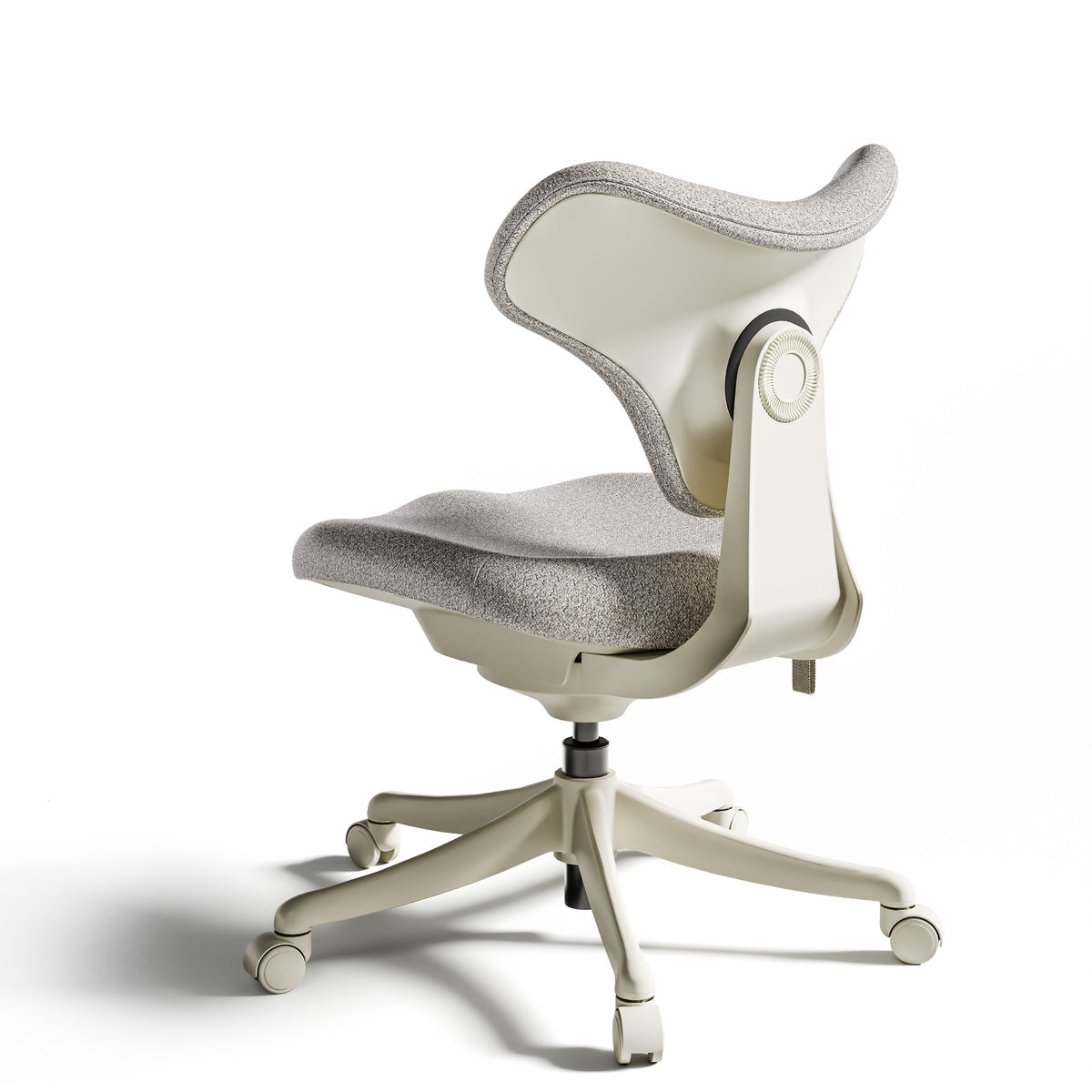
The OdinLake C1 Arc is an option to compare if you want a saddle-inspired upholstered seat, a compact curved backrest, and a 360-degree swivel for a home desk. Start with its current dimension drawing and seat-height range, then run the five checks above against your room.
Shortlist the C1 Arc if its footprint clears your desk, its seat height works for you, and you prefer its seat shape and backrest during a trial. If you need more adjustable support for your usual computer sessions, compare the OdinLake L3 and check its dimensions against the same measurements. Choose the chair that fits both your available space and the way you actually work.
Your small-space desk chair checklist
| What to record | What to compare before ordering |
|---|---|
| Clear floor width and depth | Overall chair dimensions and base footprint |
| Desk opening and lowest obstruction | Seat, armrest, and backrest clearance |
| A comfortable working seat height | Minimum and maximum seat height |
| Space behind and beside the chair | Room to turn, pull back, and stand up |
| Your usual tasks and room finishes | Seat shape, support, upholstery, and return terms |
Frequently asked questions
Is an armless desk chair better for a small space?
It can be easier to bring close to a desk when armrests would hit the underside. Check the base and backrest too, and consider whether you want arm support during your usual work.
How much room should I leave behind a desk chair?
Allow enough room to pull back and stand up comfortably in your actual layout. Test that movement and measure the space it takes; chair dimensions alone do not include the room you need to get in and out.
Can a saddle-inspired chair work at a small home desk?
It can be an option when its seat-height range, footprint, and contour suit you and the desk. Try the seat shape during a normal task before deciding, and check the return terms if you are ordering online.
Choose with measurements in hand
Before buying a desk chair for a small space, record your floor clearance, desk opening, working seat height, and room to stand up. Use those measurements to eliminate models that will not fit, then compare support and appearance among the remaining options. That gives you a clear starting point for choosing a chair you can use comfortably in the room you have.