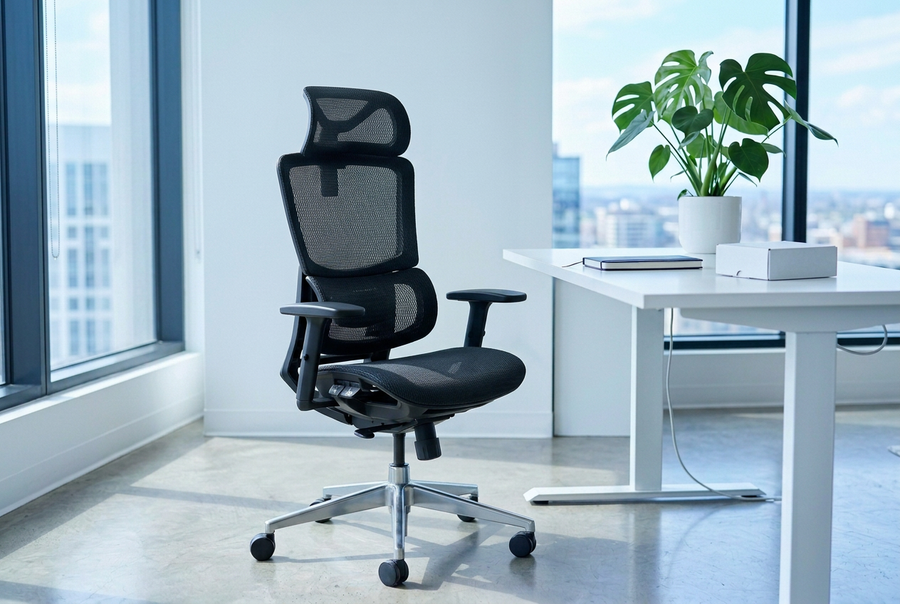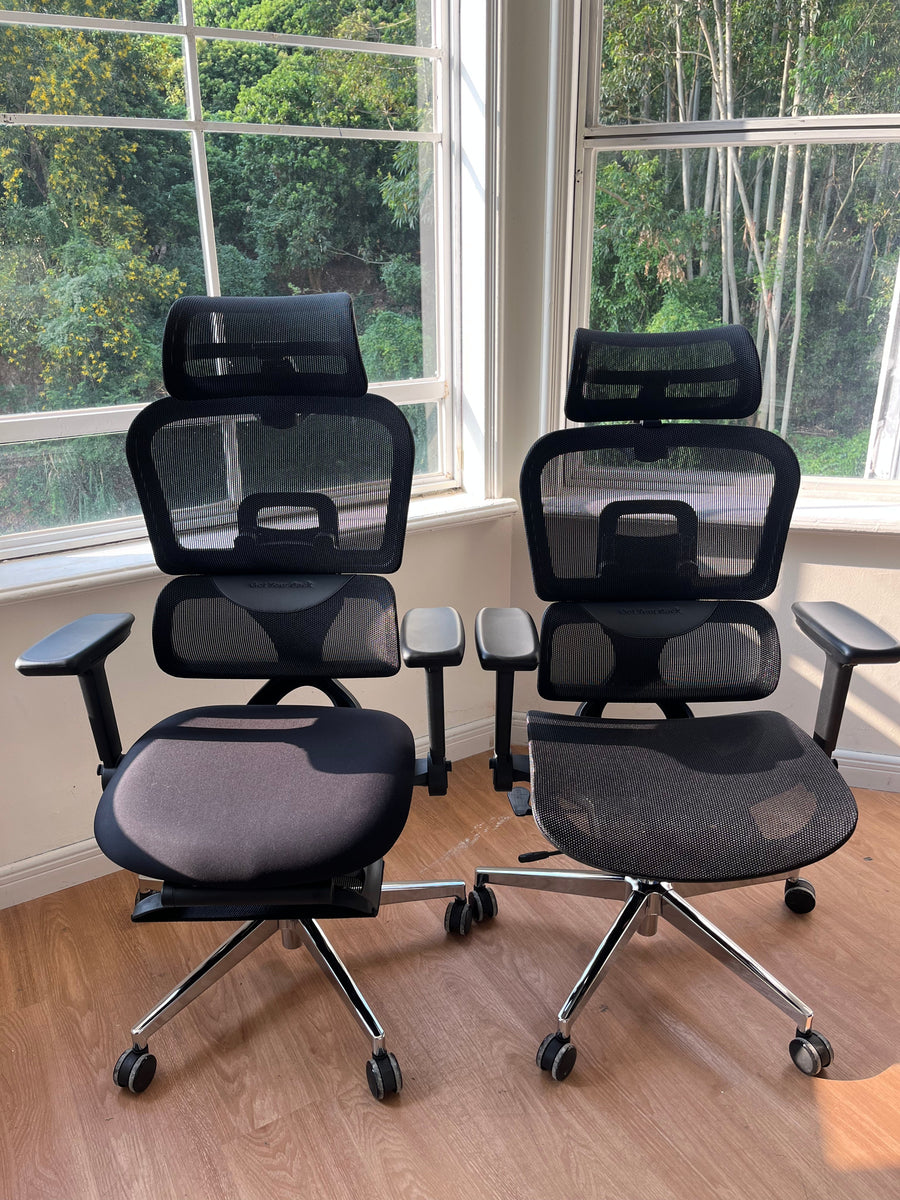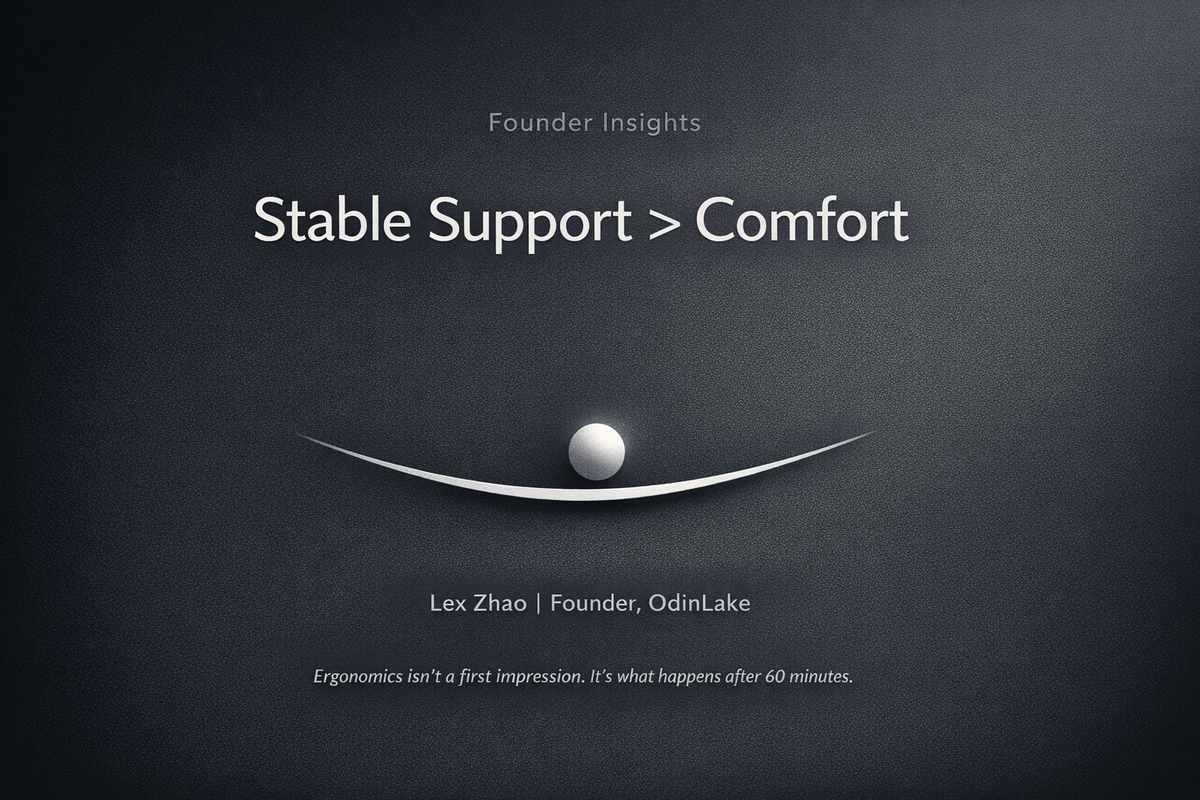
Discover why true ergonomics isn't about immediate comfort, but long-term stable support. OdinLake founder Lex Zhao shares insights on choosing ergonomic chairs that truly support your health during extended sitting sessions.
The right ergonomic setup should adapt to your body, support frequent movement, and stay comfortable through a full workday.
By Lex Zhao | Founder, OdinLake
Many people judge an ergonomic chair by a first impression: Is the seat soft? Does it feel "hugging"? Do you relax right away?
But if you sit for 8–12 hours a day, my conclusion is straightforward: short-term comfort is not the same as ergonomics. The value of ergonomics doesn't show up in the first minute—it shows up at minute 60, minute 120, and beyond. It determines whether support still works hours later, whether you have to constantly adjust your posture (I used to keep "resetting" myself in my old chair because I would gradually slide down in the seat), and whether the chair can help keep your posture aligned.

I'm Lex Zhao, founder of OdinLake—and I'm also an entrepreneur who spends long hours working at a desk. For me, ergonomics isn't a hobby. It's a real-world problem: when sitting becomes your daily work mode, discomfort quietly accumulates over time, and eventually affects focus, productivity, and long-term health. What I learned is this: many chairs feel great in a quick sit-test, but over long sessions they don't necessarily provide stable, consistent support that adapts as your posture changes—and that's exactly what long-hour sitters truly need.
That's why I started OdinLake—not just to build a "more comfortable" chair, but to pursue something harder and more important: bringing real ergonomics back into everyday life. We want you to feel supported without relying on willpower to hold yourself up—so when you're focused forward, support is working quietly and consistently behind you.
Our Principles at OdinLake
We summarize OdinLake's approach in three principles:
User-centered, continuous innovation
Real user experience and customer service feedback are more reliable than any marketing language—and they're the best fuel for meaningful iteration.
Focus and persistence
We don't chase "short-term wow" by stacking features. We rely on focus and long-term discipline to solve real user problems.
Health as a long-term partnership
A chair can feel comfortable at first—but not at the cost of long-term health. OdinLake is more than a chair; it's meant to be your long-term health companion.
Our mission is also clear: using ergonomic intelligence to create healthy, comfortable, and beautifully designed work-and-life environments—healthy work, smarter living.
And this is what "Got Your Back" truly means to us: when you push forward, we take responsibility for your long-term health behind you.
When I First Took Ergonomics Seriously: It Worked—But It Also Revealed a Real Problem
I first truly learned about and used an ergonomic chair in 2018. At the time, my work intensity was extremely high. I often spent more than 16 hours a day at my desk. Sitting wasn't occasional—it was the default.
Over time, the discomfort from long sitting quietly added up: aches in my lower back, upper back, neck, and shoulders. That soreness made it clear this wasn't something you could simply "push through."
At first, I tried physical therapy to relieve it, but it only helped temporarily. Eventually, I did something that, back then, everyone around me considered "luxury": I spent close to $300 (roughly equivalent at the time) on my first ergonomic chair—and to reduce the financial pressure, I even paid in installments.
I have to admit: it genuinely helped for a period of time. My back discomfort improved significantly. My focus became more stable, and my productivity increased. I used that chair continuously for several years, then passed it on to a coworker—and it's still being used today. To me, that experience meant two things:
First: ergonomics is not a concept. It can truly improve the experience of long hours at a desk.
Second: it helped me see something many people overlook: if you sit long hours, you must treat long-term health as the priority—not just short-term comfort.
However, over long-term use, I noticed a repeated pattern: in a normal seated posture, my body would gradually slide forward in the seat. You can feel "stability" slowly disappearing. To regain support, I had to stand up slightly and sit back down—basically resetting my posture to a more correct position.
That chair helped me, but it wasn't perfect. Its weakness became clearer the longer I used it.
More importantly: this wasn't a one-time issue. It was a long-term pattern. It doesn't always create immediate pain, but it shows up after a few hours—or even after days of repeated use. It won't reveal itself in a three-minute sit-test, but it returns again and again during long work sessions.
That's when I began to separate "ergonomics" into two completely different dimensions:
- First-impression comfort (easy to feel quickly)
- What happens after hours of use (only revealed through long-term sitting)
And that's where I formed a judgment I still repeat today: if a chair requires you to constantly "reset" yourself to maintain posture, what it's missing isn't softness—it's stable support. And for long-hour sitters, this is not something you should have to solve with willpower.
Sitting Is Becoming the Default: Ergonomics Must Solve the Long-Term Cost
Once I started viewing ergonomics as long-term stable support, a bigger reality became obvious: sitting isn't a short-term phase. It's becoming a long-term structure of modern work.
Today, no matter what industry you're in or what tools you use, work is heavily tied to screens, meetings, and sustained attention. For many people, sitting is no longer a choice—it's the default.
That means real ergonomics shouldn't aim to "relax you quickly." It should reduce the long-term physical cost of sitting. Because long-term cost has a few characteristics: it shows up late, accumulates fast, and is hard to trace back to one single cause. But your body keeps honest records: more fatigue, more tightness, and more frequent need to adjust.
This is exactly why my earlier experience made sense: you don't feel sharp pain right away, but you feel more tired after a few hours. You don't notice it in a three-minute test, but over long sessions you keep sliding and keep needing to "reset" for stability.
From that point on, my standard for ergonomics became stricter: a chair must provide stable support even when your posture shifts, your energy drops, and your attention is forward. It cannot make "maintaining good posture" your personal willpower problem.
That's also why I'm increasingly convinced: if sitting is becoming the default, a truly responsible brand must bring ergonomics back from "short-term feeling" to long-term value—and that's what OdinLake is here to do.
Let Me Make the Conclusion Even Clearer
The key to ergonomics isn't "comfort." It's long-term stable support.
A chair can feel comfortable at first—but not at the cost of forcing you into constant adjustments, slow compromises, and "getting used to" fatigue.
For long-hour sitters, a truly good ergonomic chair should achieve this:
- You don't need to constantly "reset" your posture to regain support
- Your attention can stay forward, while support stays reliably behind you
- When your posture changes, support keeps up—instead of forcing you to adapt to the chair
This is what "Got Your Back" means to me personally—and what we're working toward as a brand.
A Practical Tip: Don't Judge a Chair in 3 Minutes
If you're choosing an ergonomic chair, I recommend shifting your test standard beyond first impressions. Ask yourself three questions:
- After one hour, do I start sliding forward without noticing?
- As time goes on, do I need to constantly adjust or "reset" myself?
- When I change posture, does support still stay where it should be?
Many "short-term comfort" problems won't survive these three questions.